Beyond Cusco Peru – Stage 2 4th April 2019
Before we did the exhaustive one-day trek to Rainbow Mountain I had to secure the journey to Ollantaytambo 2792m elevation for a few more relaxing days in another scenic location to assist in the high-altitude acclimatisation. This location was highly recommended to me by a travelling couple I met at an expo in Brisbane. The main choice most people make from Cusco is to get a Colectivos van direct where they operate like taxis all day & into early night back & forth between Cuzco. They leave primarily when they are full (about 8 people). Usually costs around $4-5US per person. Journey is 1hr50mins (80klms) but we took the 2hr 15mins (91klms) route which forms part of the Sacred Valley Tour. There was no rush to get to our destination and with the chance of seeing some secluded sights it was an added bargain. The Sacred Valley streams along the Andes Mountains and said to be linked all the way to Chile.
We walked our narrow street early in the morning to the waiting mid-sized bus; loaded our backpacks & found the best available seats with our cheerful guide. Winding your way out of Cusco is a task in itself and takes quite some time to negate .. very winding, steep & narrow streets with all types of housing and security gates/ fortresses & dogs scavenging the garbage along certain points of the roadway.
Our first stop was Chinchero at 3700m altitude with a population approx. 10,500. We ventured into an open area surrounded in most parts by terraced Inca walls that has stood the test of time. Immaculate in their presentation. From these terraced viewpoints you could see the direction of the Sacred Valley route meandering along the Andes Mountain range. Our guide showed us some aspects of the wall construction where rocks were in exact form to each other. Seems like they were cut with a laser beam to match each other’s shape. The accuracy is astounding … then they are usually angled back so there is a void to the next block & this void is filled with small aggregate stone & special clay forming a tight mortar backing. The face of the wall is also tilted back & not true vertical so an earthquake cannot dislodge the wall easily.
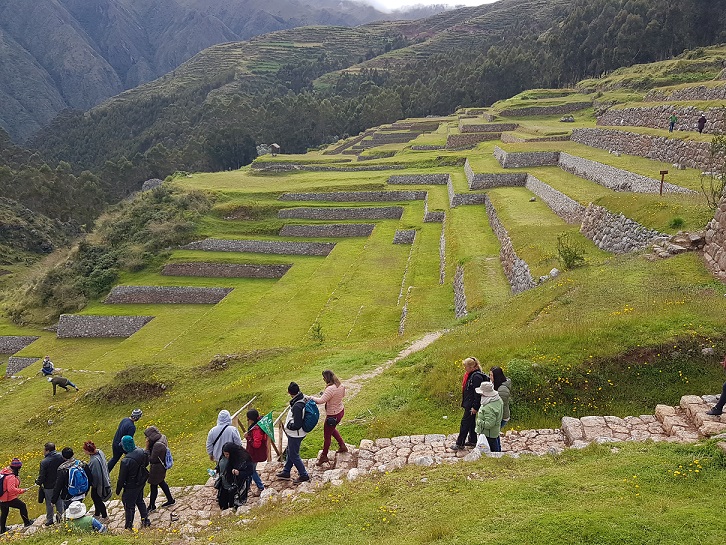
Terraced Walls 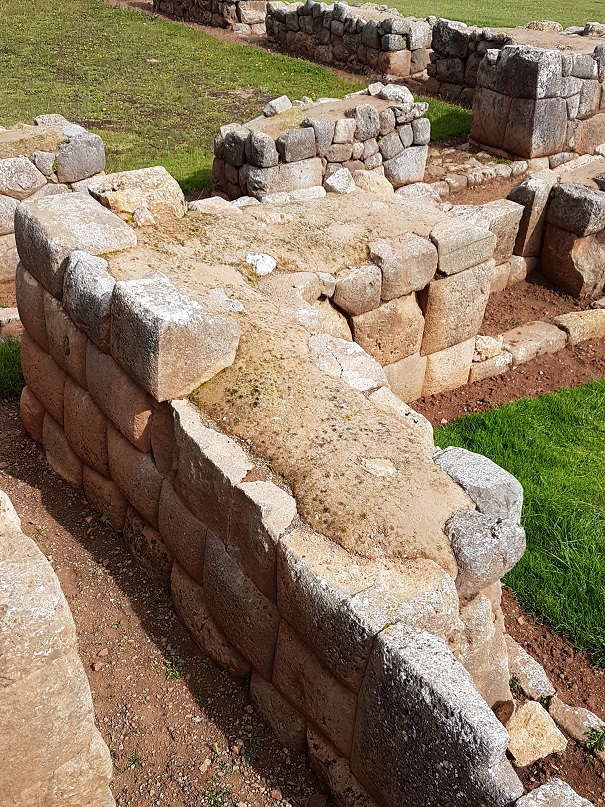
Stone Wall Construction 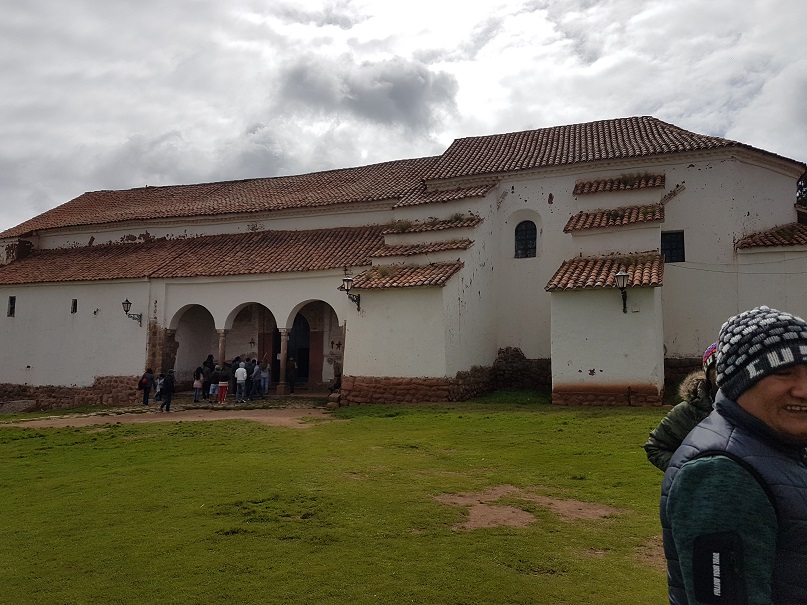
17th Century Church 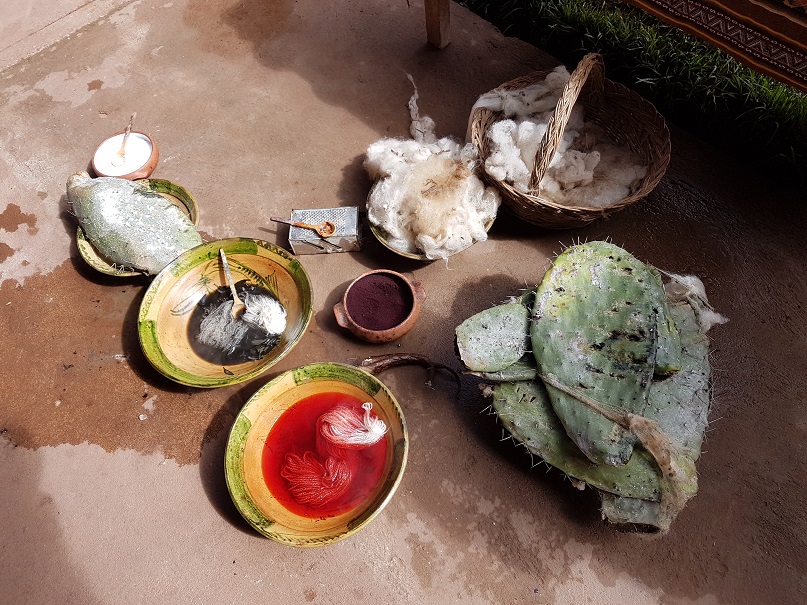
Dye Manufacturing
From the open area our guide missed notifying us of the slightly dilapidated white building slightly larger than the others. It was painted white on render to stone work. Didn’t really look much but as we now were standing at the side main doors; we were advised of this 17th Century contemporary Catholic based church built on top of the base of an Inca temple. We were not afforded the time to race back to the field and take the best angled photo showing this wonderful hidden treasure. It was mandatory that no photos or videos to be taken inside this church .. & they enforced this too!! Believe you me, the temptation was unbearable. Three distinct versions of Jesus Christ and ancient sculptures depicting historical events, gold leaf figurines, painted scenes on ceilings, alters and pictures that you could look at for hours. There was so much detail to see. Truly amazing. We were all shaking our heads in disbelief.
After the church we were ushered into something like the large backyard of a house. Some women dressed in Inca clothing and with large stalls of clothing, rugs, shawls, etc, etc for display & sale. I wished I could pack more of these in my backpack. The items were a lot cheaper than Cusco. One of the women started a demonstration with some bowls of water on the floor. She grated a root of a plant into the water, much like shredding a potato. She whisked it with her hand & it lathered up strongly. She placed the virgin wool of the alpaca into it & it instantly was bleached white. From there, she picked parasites from the leaf of a cactus (small black growths). Rubbing these on her palm it formed an instant bright red colour. This created a dye colour for the wool. Mixing this with other vegetation (limes, lemons, etc) other colours came distinctly glowing in brightness. Now we know how they get so many bright colours into their clothing. Truly amazing.
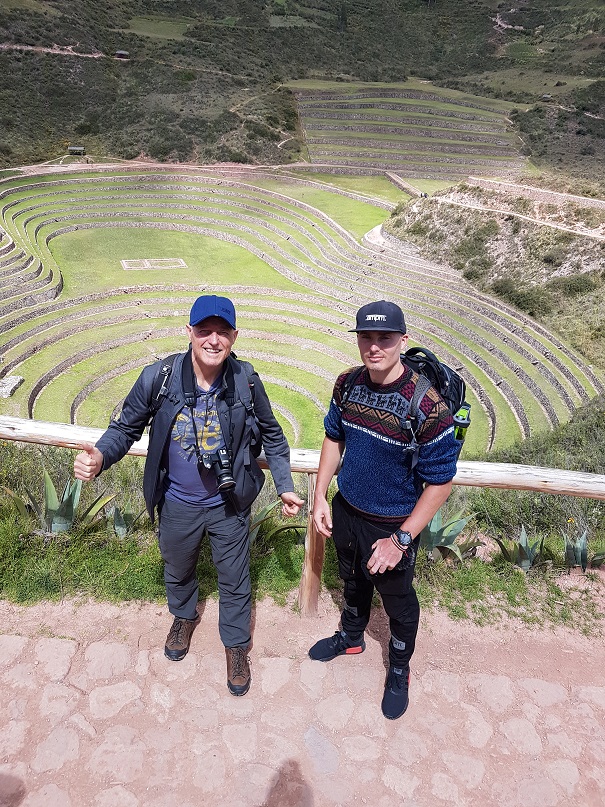
Our next stop was Moray (sounds Murr..aye). A very winding dirt road that leads you to an outpost that is an archaeological site approx. 50klms Nth West of Cusco at 3500m elevation & just outside the village of Maras. Here you find 3 main terraced amphitheatres approx. 30m deep surrounding the hilltop we’re standing on. To overlook these circular terraces is very inspirational of their uniqueness and construction abilities. Our guide informs us these are agricultural terraces where the Incas could grow an enormous range of foods where to normal people it was a folly to even consider growing food at this altitude and its harshness of climate.
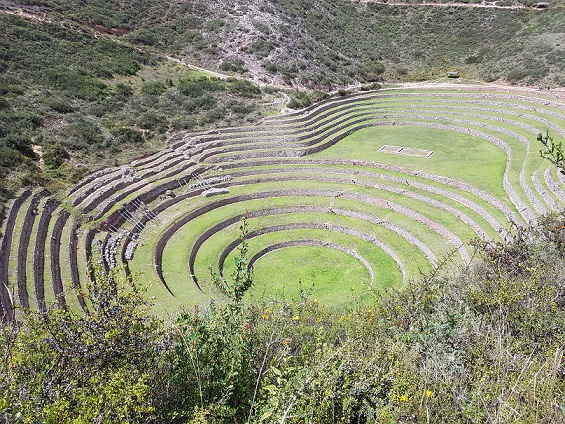
Warmer Amphitheatre 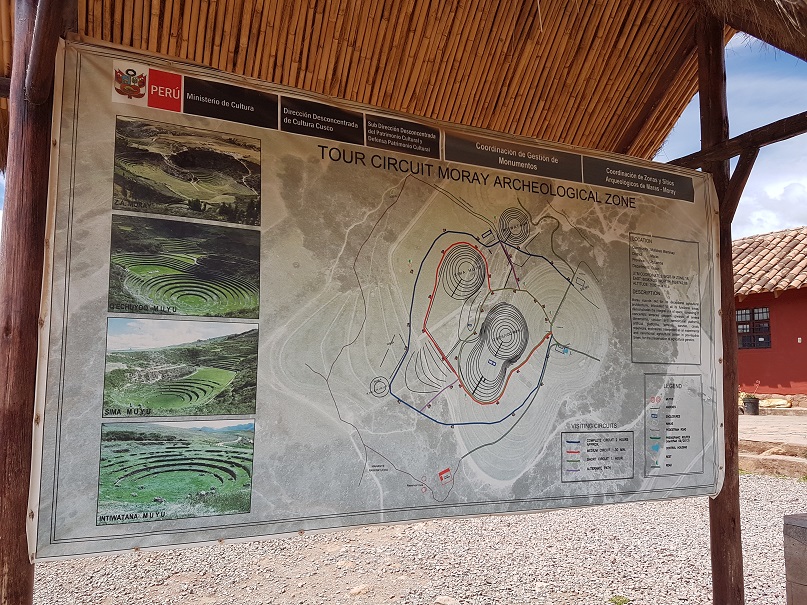
Moray Setout
The ‘amphitheatres’ followed the surrounds of the hilltop for a specific reason. The first one was located facing directly toward the Andes Glacier mountains and at a specific depth to ‘absorb’ & deflect the harsh coldness and high winds from the mountains. This would grow the cold climate Winter crops. The 2nd amphitheatre was somewhat sheltered now from the winds by the first one but still gets the sunshine so a warmer type crop would prevail. The 3rd, being on the furthest side of the hill top would be even more protected thus warmer climate crops prevailed. Very ingenious. These Amphitheatres were called ‘testicle fields’ .. translation of course .. but were reflected as fertility fields as a form of their survival.
Down the same winding and dusty roadway, we stop for lunch at the next big city of Urubamba 2870m & population of 2,700. This city and its region, is the agricultural hub for Cusco & Peru. A very fertile valley. The turbulent river passing through it is renowned for rafting, etc.
With lunch over, we found ourselves winding up another steep hillside. The temperature you could feel becoming warmer. With one high hairpin corner, we are now looking over the Maras salt flats. What a unique symmetry canvas of all sizes of squares and rectangles over the landscape of large hillsides. These salt mines span 5 centuries of salt production. Located into the steep hillside & laid out in evaporative shallow ponds fed by wandering viaducts through a strong bubbling natural spring in the mountain side atop subterranean prehistoric salt lakes in the tectonic plates below. The flow is quite amazing. Water is channelled into small gravity fed viaducts wherever it is needed. Grass hessian in placed under stones of a certain matching size and this helps divert the water to another viaduct.
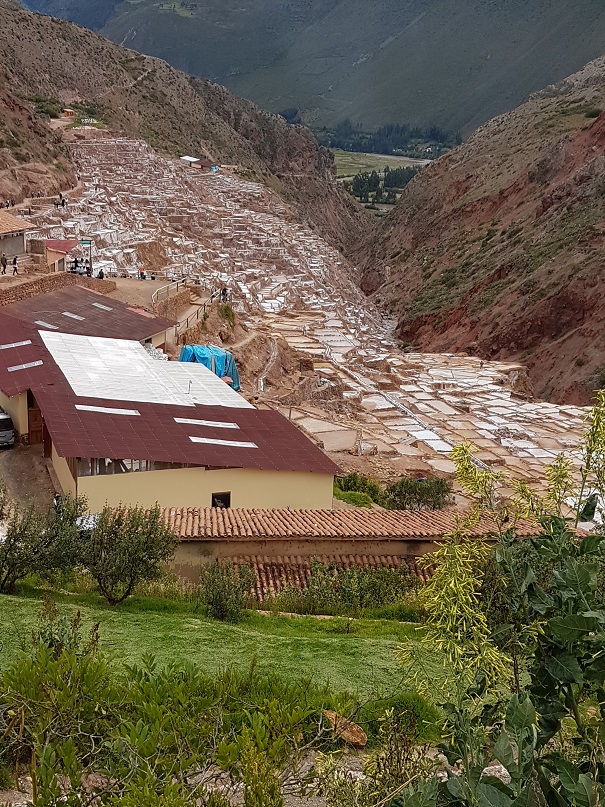
Salt Mines from Road 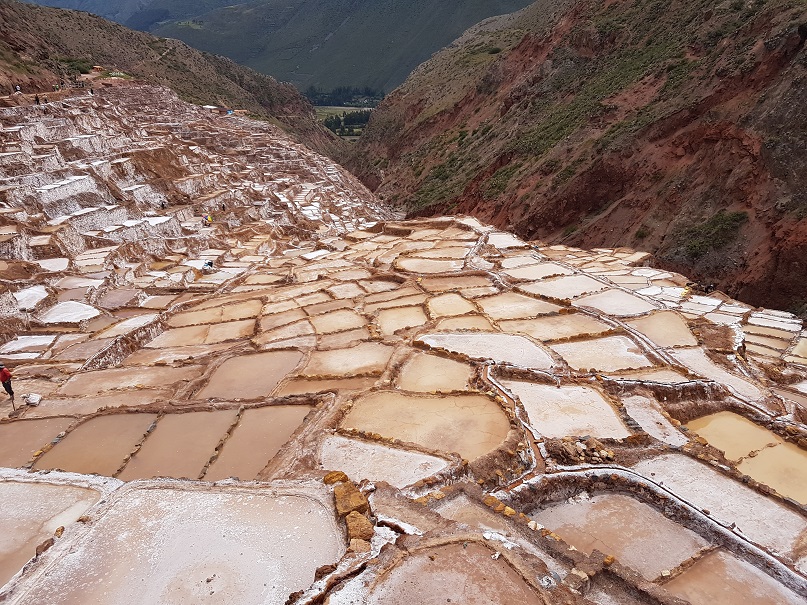
Salt Mines 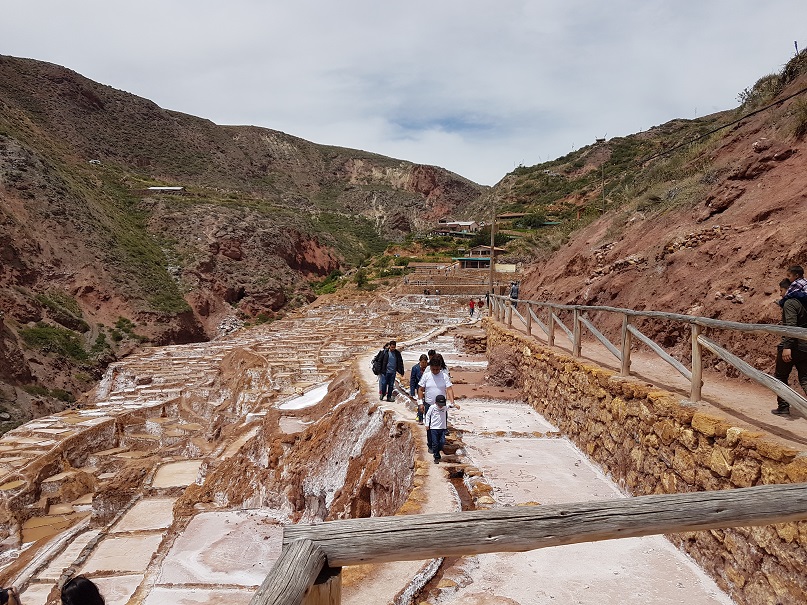
Salt Mines 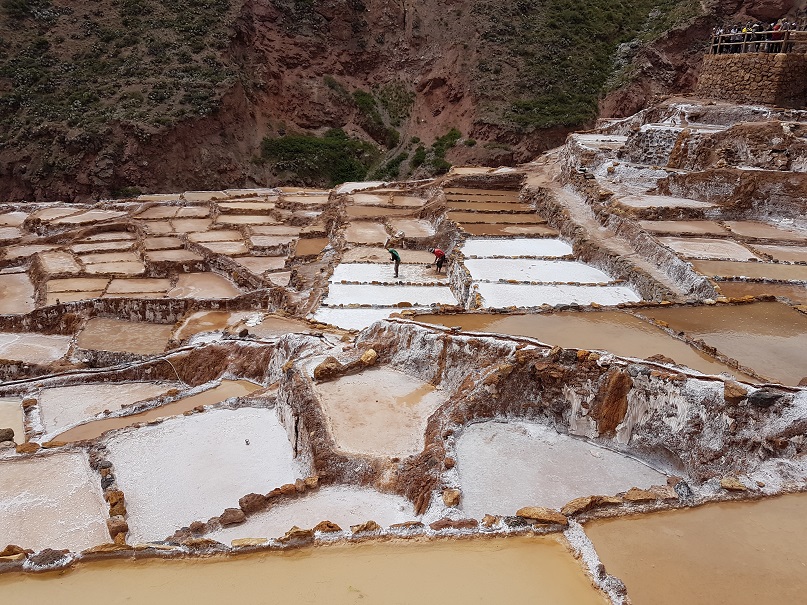
Workers
The salt ponds are all similar in shape and usually cover 12 sq metres each and are about 300mm deep and once filled they are left to evaporate by the sun. Did I say it was warmer here? Well, it is becoming very hot on this side of the mountain. Remember the saying …. “I’ll send you to the salt mines”. To me, a true punishment. There is no relief … as I watch 2 men in one dry pond. One thumping the base hard with a large timber plate (heavy) over his shoulder in a grid format not missing one inch of pond space. The other, scraping a thin layer of salt behind. The thumping is the method to extract the clay granules from the salt. There are hundreds of ponds to cultivate and the local families each have a consortium of ponds (leased) to work. I have no idea how they know which one is theirs. They truly work hard for their living. With very little moisture left in my body to sweat we saunter back up to the air conditioning of the bus. What relief!! So guilty to the workers below though.
Back down the dirt track again we venture further on to our destination, Ollantaytambo at 2,792m elevation and with a population of 10,200. We decided to end our tour at the main square of the village & let the other passengers continue to the old archaeological site at the western perimeter of the town (200m from the main square). The remaining passengers were on a full day tour & will return to Cusco about 8pm. A very long day for them.
With my booking made at Las Portadas hotel, both Scott & I were keen to collapse there. Looking around we saw plenty of crazy miniature tut tuts (motorcycle tri-wheels with carriages) that appeared too small for all our luggage plus ourselves. We were approached by the Mini-Mart store owner. He was so polite and could speak some English thankfully. He showed us the ‘taxi rank’ in front & said 5 soles should cover it. The taxi driver was a bit firm & said 10Soles ($3US) to which I didn’t find the need to argue. We bundled our bags in, closed the doors & headed around the square & then up the one-way cobblestone laneway (main street); first turn left & the left again down the one-way road we came in on & there was Las Portadas; some hundred metres from the square. A cute ride for 10 Soles.
We scored well on this hotel … room & reception was great. WiFi excellent and with brekky every morning … Yay!!! What a great few days to relax. We slept so well that first night under 3 heavy Inca woven blankets even though they short sheeted my bed (every night .. LOL). After brekky, we ventured to the main square, giving way to close traffic swerving to find the best undamaged part of the road. At the furthest end of the square there is a similar one-way laneway (main street) going down to another level which then splays out to the markets and then the entrance to the archaeological Inca site. Our tickets from yesterday are still valid (2 days) so entry a breeze. This site was the royal estate of the Emperor Pachacutionce; an Inca fortress and this was reaffirmed when you see the size of the walls & terraces up this mountain. Everything in this site is huge! The staircases, stones, walls, terraces … no shortcuts.
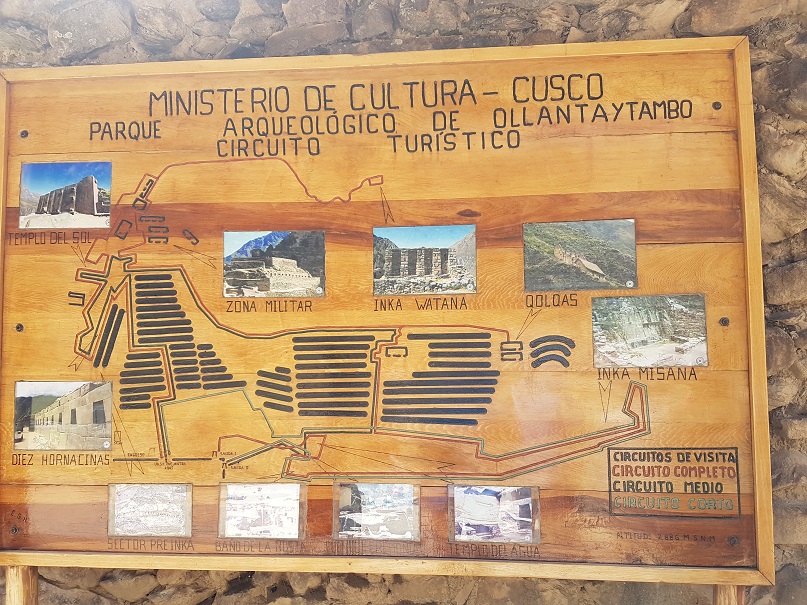
Archaeological Site 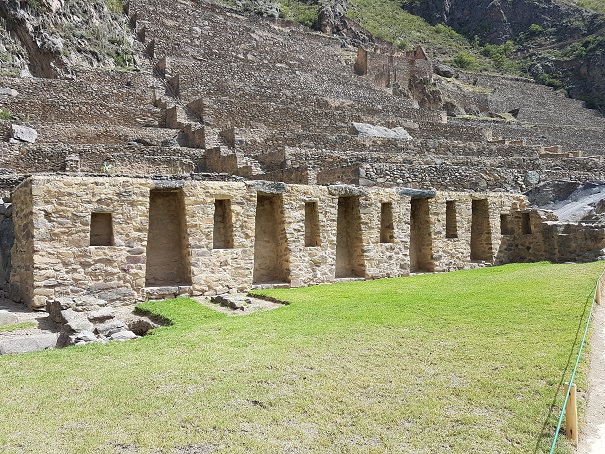
Ceremony Windows 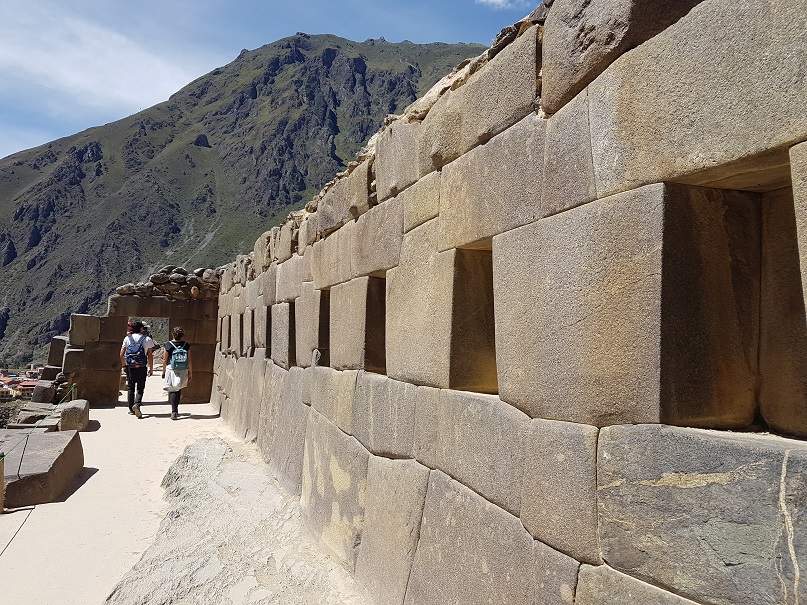
Stone Walls 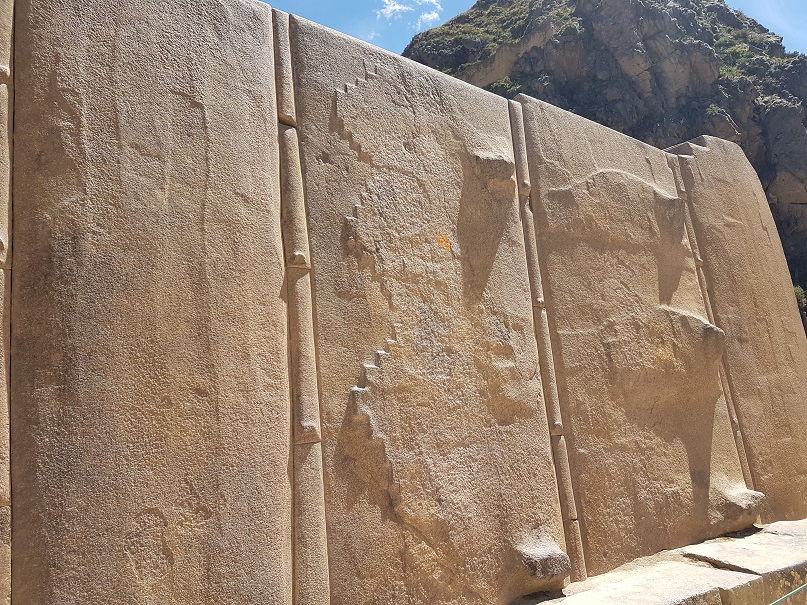
Vertical Stone Walls 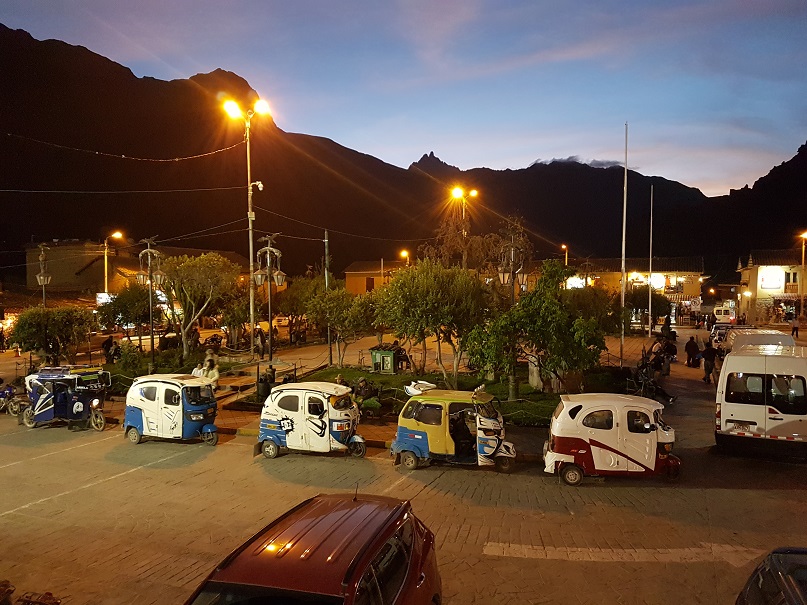
Ollantaytambo 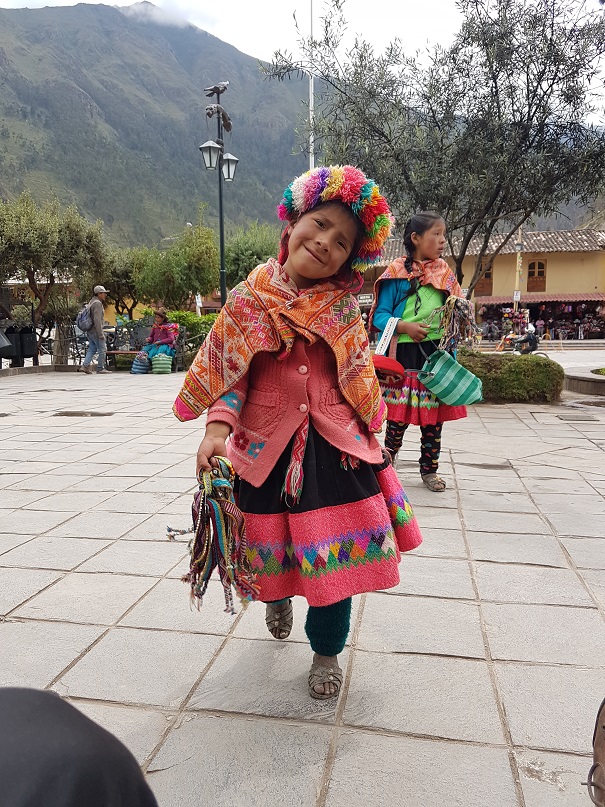
Inca Child
We took plenty of photos and watched where we were allowed to walk venturing further & further in height. Such a view of the village and surrounding area. With walking up each staircase getting higher Scott noticed a door opening (no door or sign) at the rear of the fortress site to an open hillside with a very small track. Of course, onwards & upwards … a track that kept going higher. A little later we find similar trekkers coming back down … no information provided for what lies ahead so we kept going. Scott made a cute, small stone tower while I was sucking in the oxygen. Inclines appears to be not my thing. After a while we came across a viewing platform. WOW!! What a view! We could see the Inca train used to get to Machu Picchu following close to the cascading river, grazing land and farmhouses, a soccer field of course (numerous & everywhere), the village, mountains, valleys, the fortress site below. This track shows you the things you find once you venture past the normal boundary.
For a few days, we found our preferred eating places for the best vegetarian meals, pizzas & to die for juices. What a surprise to find such great food in a place that has you questioning it. The people were warm & friendly and one restaurant even gave me key ring gifts for my grandchildren. Each night before retiring we had a shot of a beloved sugar cane liquid, known as Anisado, at 20 soles a small bottle. It is an alcohol, a preventative medicine, etc so Cheers … yummo!!! A great aniseed taste and so smooth & warm. A wonderful purchase I believe to end each day. Would replace my scotch I think.
All of a sudden after our last night there we reluctantly secured a Colectivos for 15Soles each back to our beloved La Casa De Mayte hotel in Cusco. Thanks, Ollantaytambo for a great time albeit the road network is another story not to revisit.
My next blog could be the famous Inca Trail to Machu Picchu so stay tuned.
 BH Life Travels
Love following your travels and photos
LikeLike
Many thanks Helen. Appreciate your comment.
LikeLike