Machu Picchu Found – Day 4 11th April 2019
Over my last few blogs on Machu Picchu have you been saying out loud “Machu Picchu” the way it sounds? LOL!!! I bet you have!! I have purposely waited now till this Day 4 to advise the correct and absolute truth to how you say Machu Picchu in the official language.
If you have been sounding it the way it is spelt, then you need to read the following sentences. The true pronunciation is “Machu Piktchu”. The word meaning of Machu is “old or ancient”. Picchu (Piktchu) means “mountain”. Therefore “Old Mountain” which is the true acknowledgement. If you say “Picchu” as it sounds then the sound meaning is “penis” … yes … penis. LOL!!!! So, whenever I hear people call it as it sounds then I recall “Old Penis”. So funny!!! Will you be now correcting people? Best of luck!!!
The Huge Day 4
3 full days of trekking, 3 nights of little sleep and now OMG!!!! A 3.30am wakeup call!! As it is still nightfall we still receive our “buenos dias” .. “Good Morning” greeting from the porters plus our hot cup of tea. However, a strong brew of coffee may help more with our sleep deprived eyes. Toilets remain a huge challenge and to be back in time too. The same routine is required but with more urgency as there is a race now to the Control Point to beat everyone else. Today will be our shortest trek of 7klms but very clearly will be our longest day!
The chef has provided us all with a paper bag breakfast with a juice pack to eat along the way or to when we get to the Control Point some 150mtres away from the tents. Surprise!! .. with our best effort we still find ourselves behind some 50 trekkers or so to the entrance gate, but at least we are not the last ones.
It seems like ages till the line starts moving. Everyone starts chatting and the excitement builds. Ronny takes care of all our passes and it’s a go for the pathway. Some over zealous trekkers do the scramble and take silly risks in overtaking others in the darkness. There’s a few that are quite rude and careless. Ronny warned us of this and to not do this type of trekking. You can get injured and totally miss the final day and Machu Picchu. That would be a complete travesty after slogging 37klms to the Control Point, etc with only 7klms to go.
As the trekking line thins out and the curtain of night darkness is abating to the light; we can see the clouds/ fog-like drifting in and out and the mountains coming out in the background with form. To walk in the pre-dawn and sunrise light is truly a magical experience as we make our way around the side of mountains of such elevation.
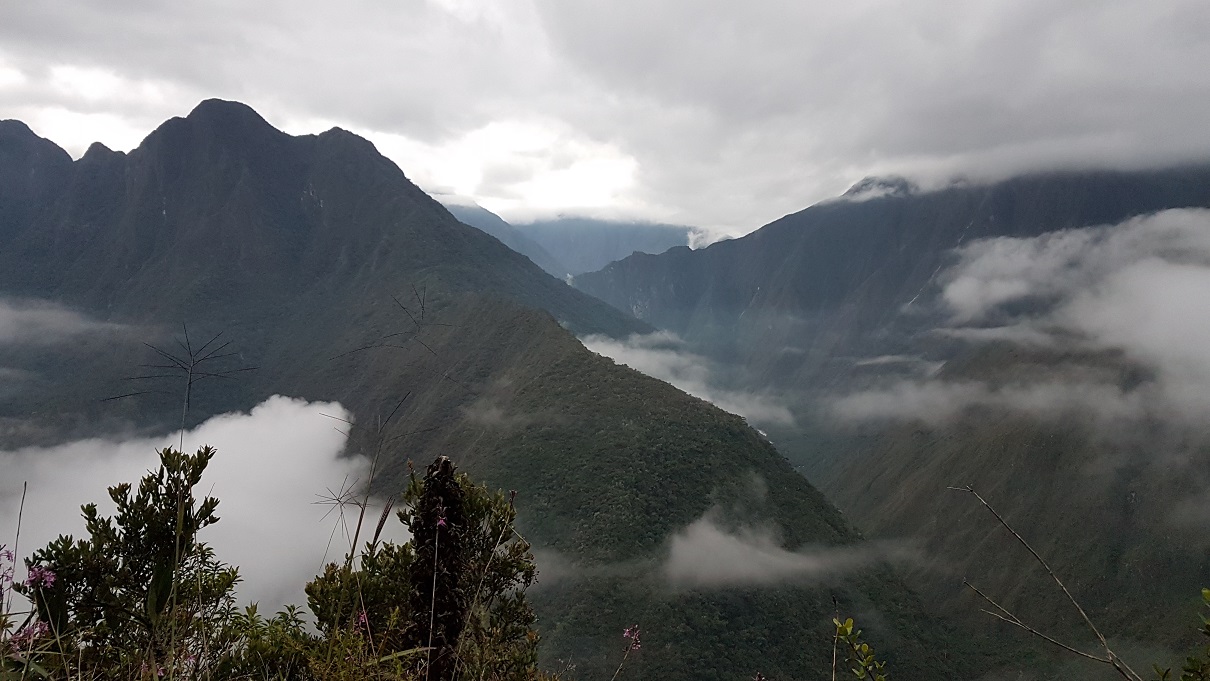
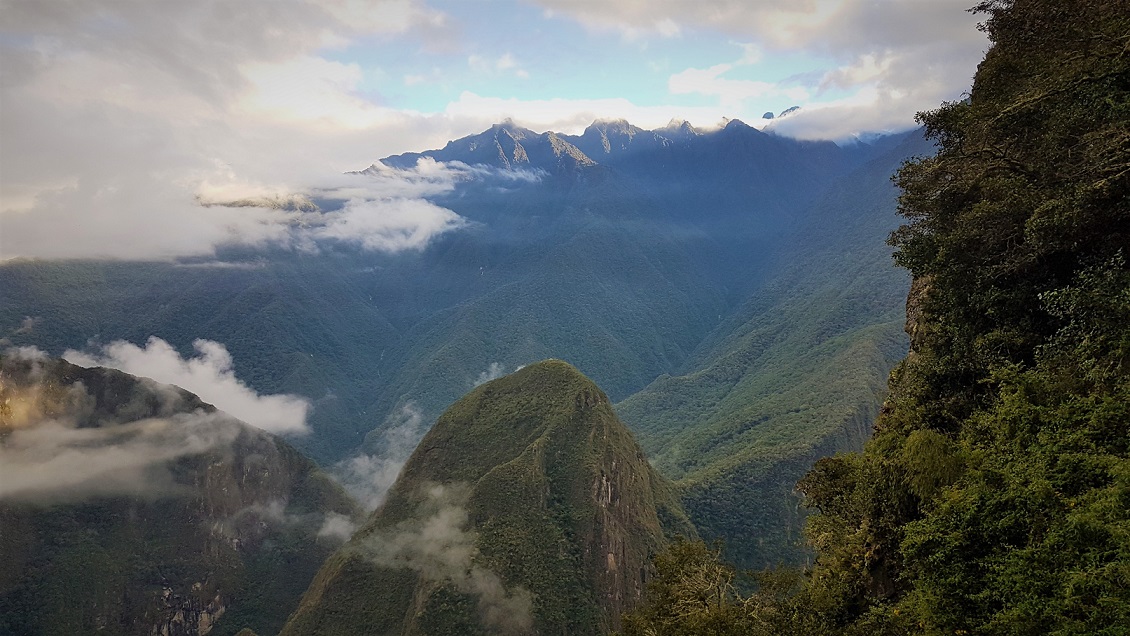
The pathway stairs elevate and become steeper and really slows us down but we remain calm with our progress and every now and then the Inca Flats come to light. The inclines still affect my speed and stamina however, much lighter than the previous days. Scott has gone ahead with the younger trekkers and our seasoned Utah trekkers. Obviously; boring with the slower “old man” even though Scott never refers to any limits concerning age. I’m OK with that as everyone must walk in getting the most out of the experience. Our walking in the early daylight makes us shed our clothing layers and to take a quick break. The air and scenery is a picture to behold .. the mountains more magical with the clouds drifting about and we know we are getting closer. Another brief chat with William, our guide, is an added bonus.
Coming around the bend with William by my side we meet up with a clump of trekkers. Great to hear other voices churning out some comments and with varying levels of excitement. Ronny, Sue, David and others catchup at this point. We now get to see what lays ahead; it is a right hand 90®bend. Ronny starts taking our walking poles and has this huge smile. We have arrived at the Monkey Stairs … stairs to an elevation of some 25m at an incline say at 60® and some 2metres wide. This we did not expect and goes to show the Inca Trek provides everything … and we are now using all fours to escalate to the top. Our muscles are doing things now we have not done over the 4 previous days. Despite its awkwardness we are all smiling doing this novelty and it is was an enjoyable experience being a monkey for a little while. I thank my friend David for the photo of these stairs. Now with our walking poles back in hand we venture off for just a little longer until we are greeted by the rest of the group with cheering and congratulations; for now we have entered the grounds of the Sun Gate or it’s Inca name of Intipunku where its purpose was the guardhouse/ fortress for the entrance to Machu Picchu.
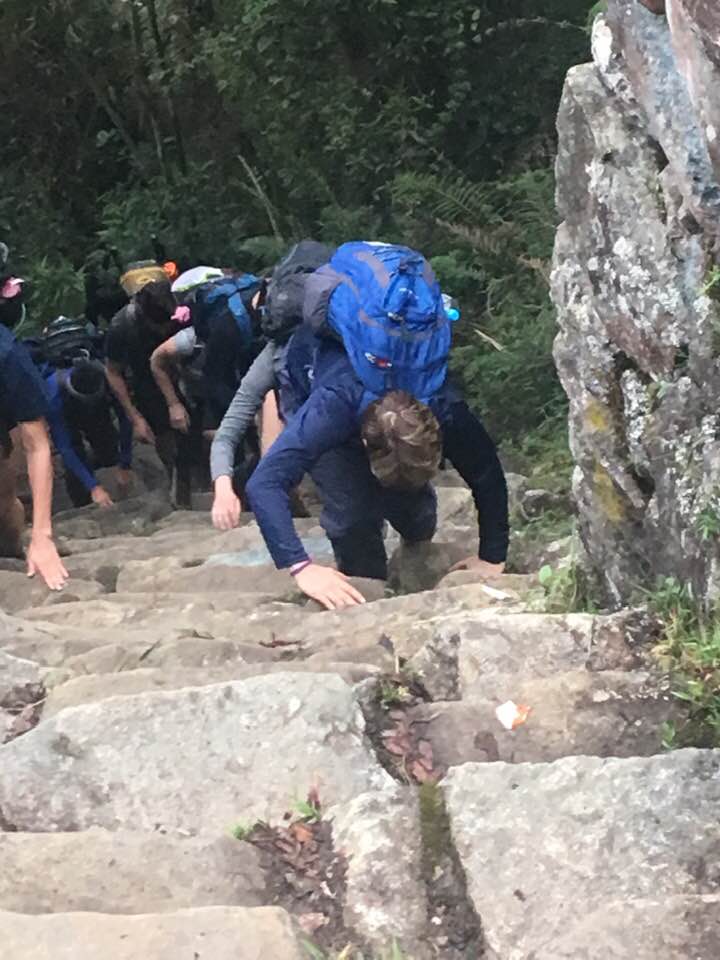
Monkey Stairs 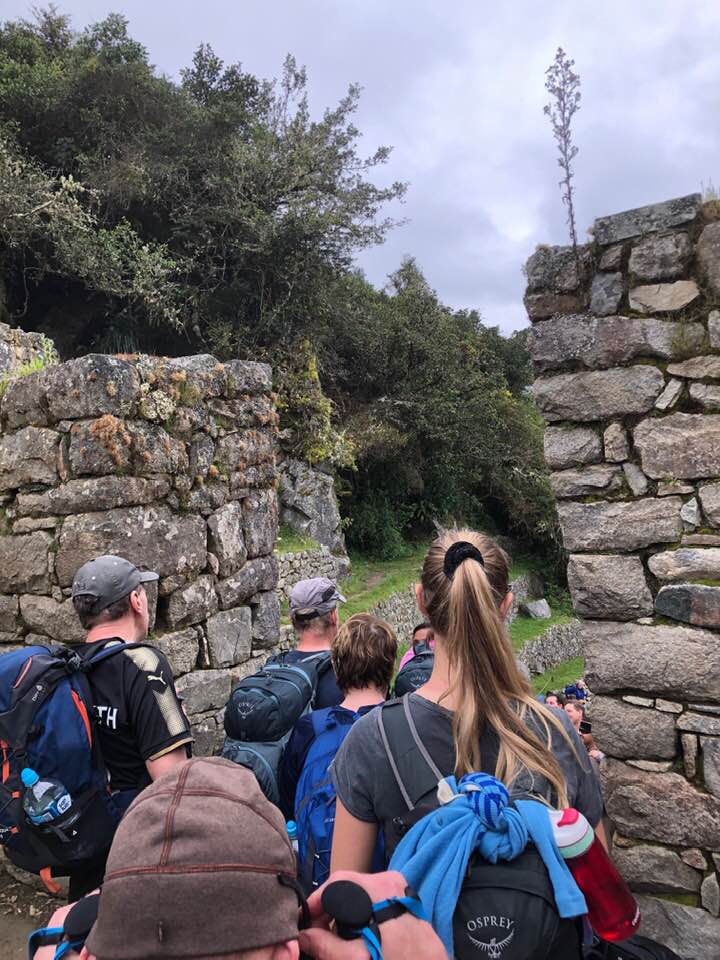
Sun Gate
The excitement of all the trekkers along with the celebratory voices and Scott’s beaming smiling face convinced me we had arrived at this monumental and sacred site; for behold as I walked to the outer walls to a ledge crowded with trekkers my eyes catch the magical landscape of the GREAT Machu Picchu. No photo can ever replace the vision I now keep within my brain files. Clouds like mist come in and out secretly showing off its glory. Machu Picchu stands some 600m in elevation below me and approx. 3klms straight ahead but it comes crystal clear of its magnificence for I have FOUND Machu Picchu in brilliant life with its famous mountains behind!
The sheer size of the stone walls of mass and mazes continue to test my comprehension to the wonders of the Incas. Such construction appears to be super human in every context as it winds and spreads over the mountain slope overlooking the Urubamba River some 450m below in the tight valley.
To be critical, I found the very winding road from Machu Picchu down to the river disappointing to my view and seeing the streams of buses navigating this road. Such a modern infrastructure in a magical scenery. I had to hasten in using my new camera and changing the lenses seeing I had arrived a little later than the others. I later found out I had misjudged the camera settings and my photos were in low quality. Arrrghh!!!!!!
Being now hurried to re-join our group was disturbing. Can’t I just sit a bit longer and take this all in? Even the clouds drifting in more did not deter my enthusiasm in keeping this view. At least 4 of us were given less time than the others so with “kicking and screaming” … not really of course .. I re-joined the group after securing my backpack and grasping my walking poles and stepped through the stone gateway to the lower and more cobblestoned pathway. I was annoyed for awhile as I had only 15 minutes at such an important site as the Sun Gate.
As we walked along a much easier pathway, we were now experiencing people in all sorts of better day casual clothing and strained faces walking towards us for they were seeking the Sun Gate view. Obviously, they were from the tourist buses below, all on a day trip departing from the township of Aguas Calientes. I believe these tourists were missing the real feeling of seeking out Machu Picchu; much like just visiting a theme park. Surely, you must have a disconnection.
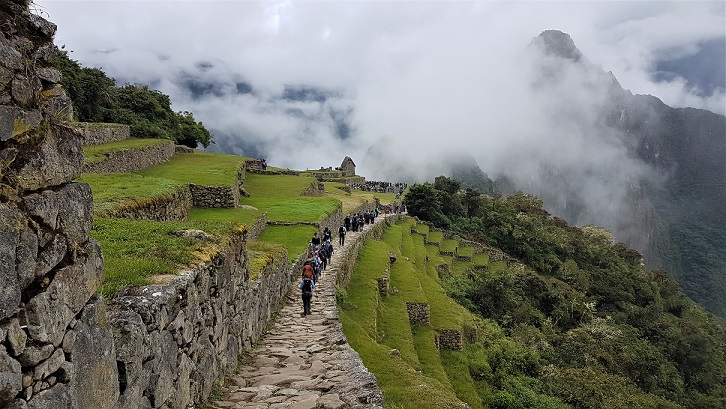
Sun Gate to Machu Picchu 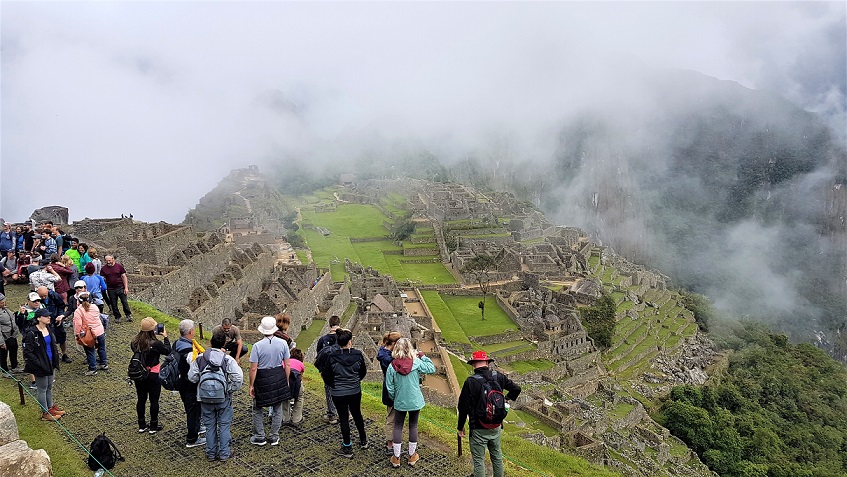
Viewing Platform 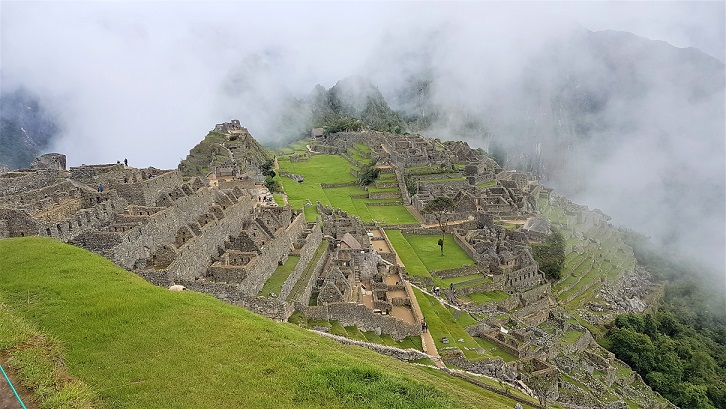
Machu Picchu
Some 30-40mins of the descending pathway we find ourselves surrounded by trekkers, tourists and numerous guides on terraces now described as viewing points. So many people, all wandering around this amazing site. Time for another group photo to complete our journey before we decant our backpacks for a more relaxed visitation of the site. Ronny offered us all another side trek to do immediately, that will take a few hours to complete and is slightly strenuous. Everyone declined except for our more experienced trekkers from Utah. The remainder were all in a relief phase and looked forward to viewing the site in a more leisurely fashion. The Utah group (Windi, Eric, Lynn & Kirsten) must complete the journey and meet the group in the township of Aguas Calientes for a late lunch and a formal good bye to all; including our guides. The timeframe would be tight.
Once the photos were completed at the viewing platform, we ventured through the path mazes towards the main tourist entrance at Machu Picchu’s lowest point. Here there is a restaurant, Café, Tourist Centre, Toilets and Storage complex … & yes … lots of tourists and cycling of buses. It was hard to find clear space to be as a group and find what is our next action. Eventually we discover the lines. One for the toilet and one to log your backpack into the storage facility. Finally get to the storage counter and then found out we had to be in the toilet line to pay the fee of 5,000 Pesos/ bag. There is also a similar fee for the toilets. Gotchya!!!
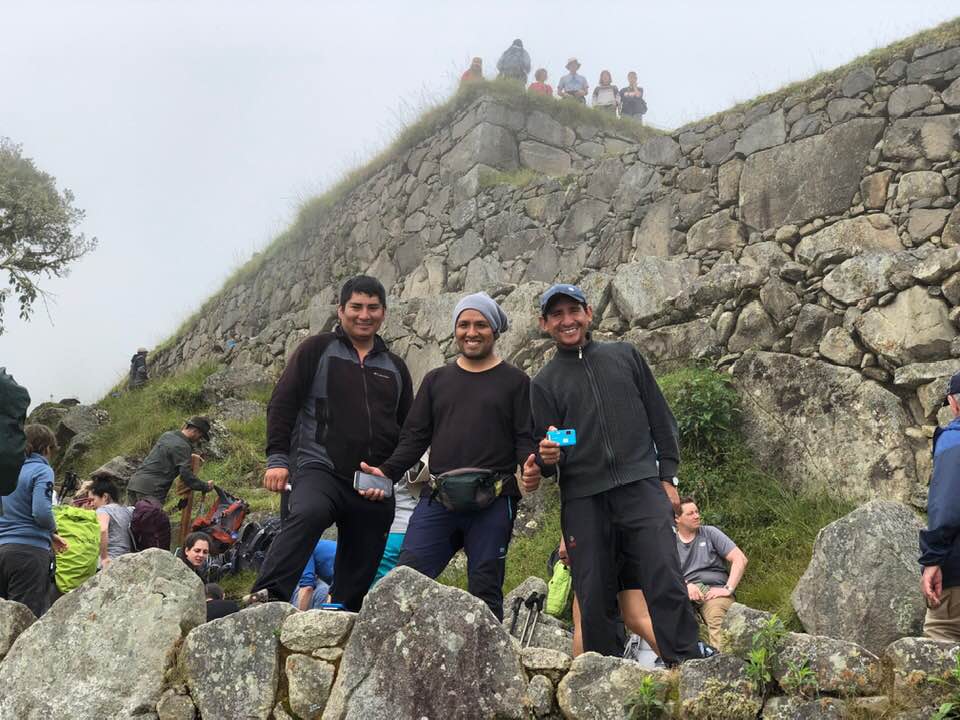
Edizon, Ronny, William 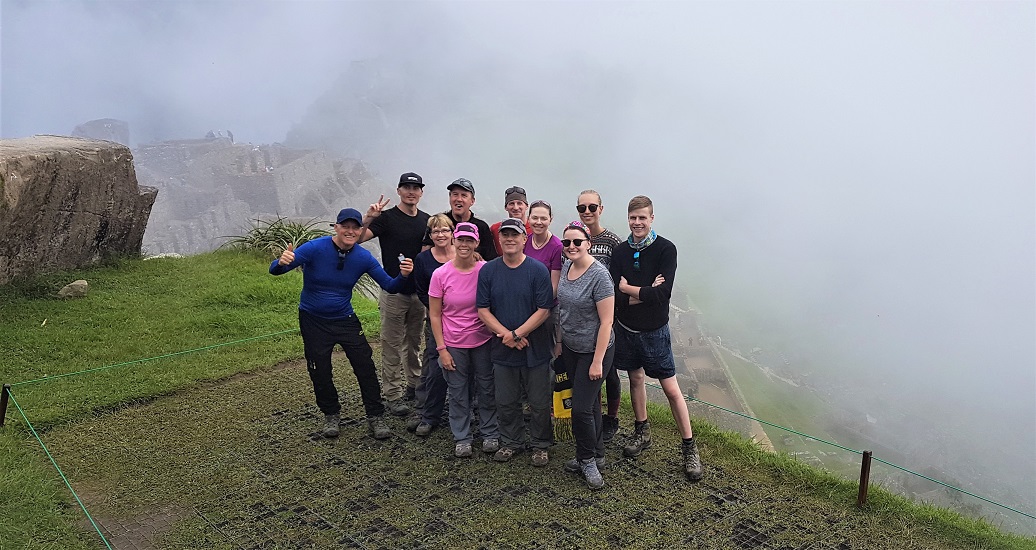
Trekker Group 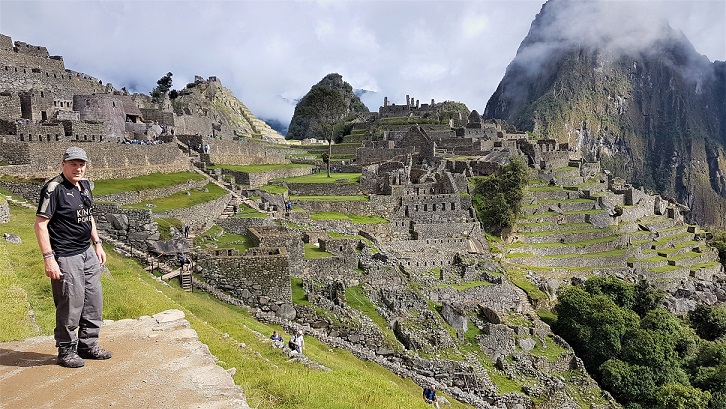
In the following frustration of paying the fee and trying to get back to the group, Scott & I finally got our backpacks into the bulk storage facility. Showing your passport, you get a ticket and they stick the other copy onto your backpack. Several workers carrying backpacks into the backroom. With all this convoluting bedlam I totally forgot and didn’t see my GoPro was still attached to my backpack externally (to make the situation worse I didn’t realise this until I was on the train back to Ollantaytambo after 6.30pm). Standing back from the counter I then noticed a gathering around a bench near the fence next to our group. Here you could self-stamp your passport with an official Machu Picchu attendance stamp. Wasn’t going to miss this opportunity.
Ronny now guides us back along the same pathway back to Machu Picchu. He provides commentary on certain aspects and history which in hindsight would have been wise to record it. The Utah Group has already continued onto their trek to Wayna Picchu Mountain; called the short trail of the Huayna Pichu trek. Thanks to Windi for the photo overlooking Machu Picchu and confirmation of the too many stairs on this trek (an extra 260mtrs higher).
No matter where you look; the platforms of different elevations, the stone walls, the accuracy of set out and the marriage of rocks is outstanding. Not sure of the purposes of most rooms and areas however, you accept they are all monumental to the university of this temple of habitation. The drainage viaducts, the staircases all in rock forms and the list goes on. There is some recorded evidence from previous earthquakes where some rock wall sections vibrated and bounced and then returned to their exact position with no gaps present. Machu Picchu is apparently built on 2 fault lines but I’m not sure where they could be in relation to the site.
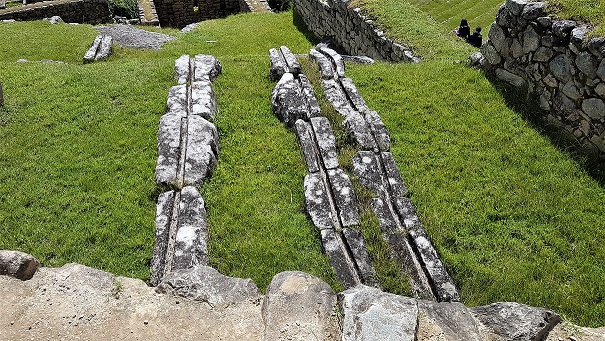
Viaducts 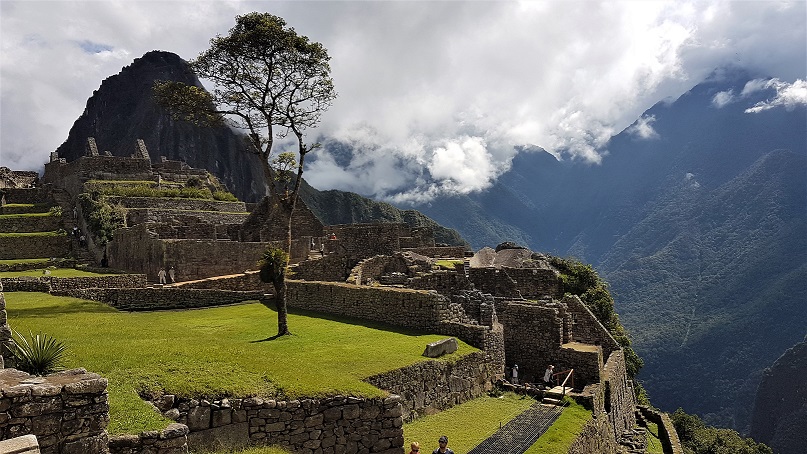
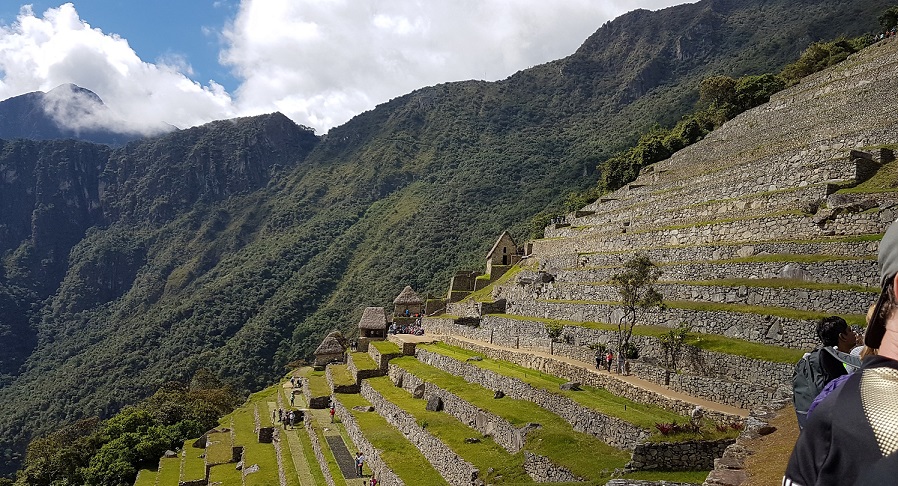
Agriculture Terraces
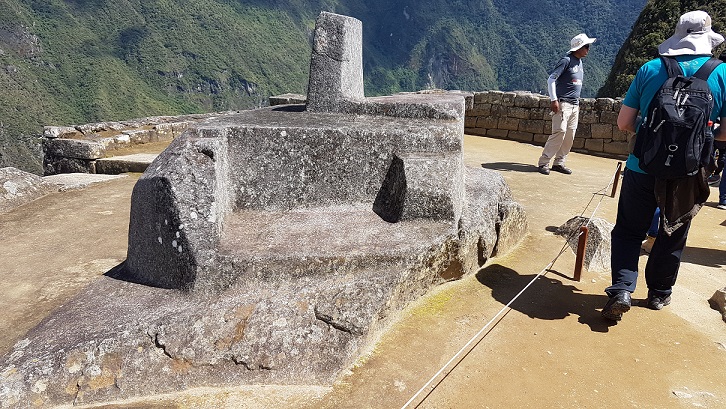
There are a number of special rocks and rock walls in different locations to suit special purposes. We find one on the top platform on its own in the middle area at the Eastern side .. it takes a comment from Ronny to highlight it from obscurity. It is shaped to form a compass point and it points directly North towards the much higher peaks behind. The other formations nearby include windows in the walls where the sun rises and shines onto the temple room’s floor & wall of each morning. Some indentations in the walls resemble the windows and these are where sacred ornaments were placed. This area is roped off to eliminate human interference and it is advised it was a holy area.
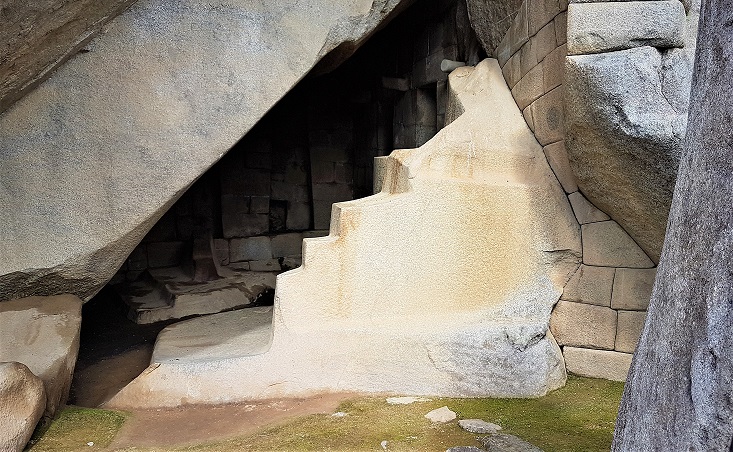
3 Step rock & alter behind 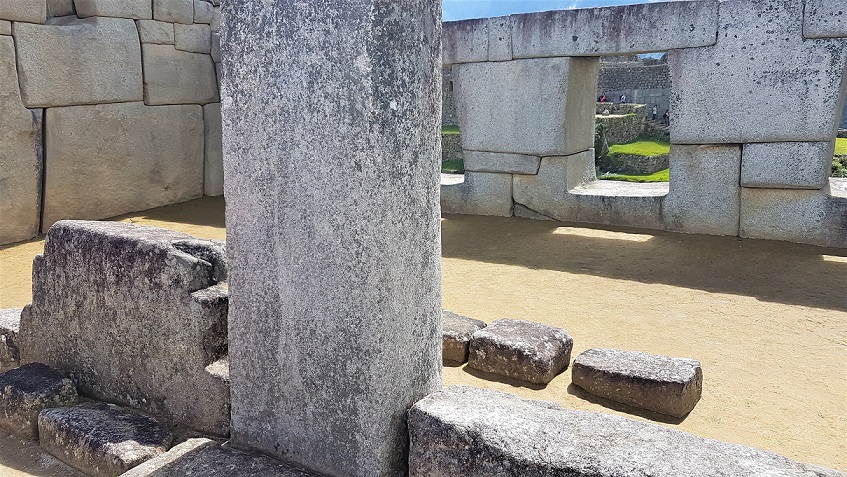
The main sacred stones are underneath an extraordinary large stone forming a cave room or temple area. The first stone fronts the entrance and was carved to the shape of the 3 steps (like the drawing Ronny did on my cheek in Blog – Day 1) symbolising the 3 classes: Snake (Lower class or lower crop fields), then Puma (Middle class or middle crop fields) with the highest one, The Condor (Highest class or highest crop fields). Behind this stair rock is a smooth sloping curved table top rock. Here the Inca King or Religious Leader would undertake sacrifices for the good of the colony. The main or common celebration was held on the Winter Solstice 22nd June each year. The Incas would pick an Alpaca to sacrifice on the stone but they would only pick the ‘imperfect’ one. Even in their day .. you could remark it was racism back then … for they chose only black alpacas for sacrificing.
If the colony was experiencing bad times through extended years, they would carry out an extra special sacrifice. These types maybe, say, once every 20 or 30 years depending upon the type and length of the travesty. Here the families would offer up their eldest daughters to the Inca King, of at least 13 years of age who would select his preference. The family would be extremely honoured to have their daughter chosen. Competition was strong between families to ensure the colony would flourish soon after.
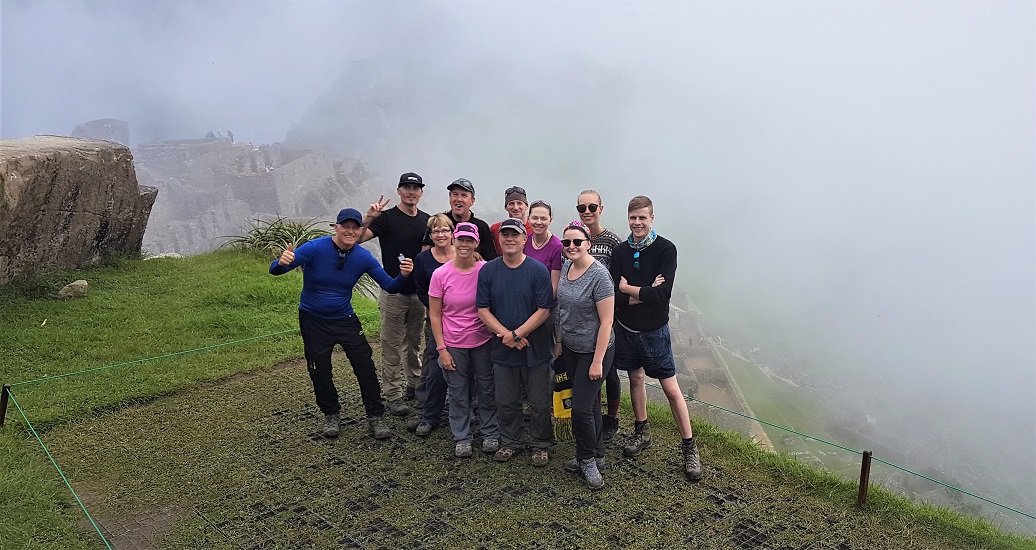
Great Group 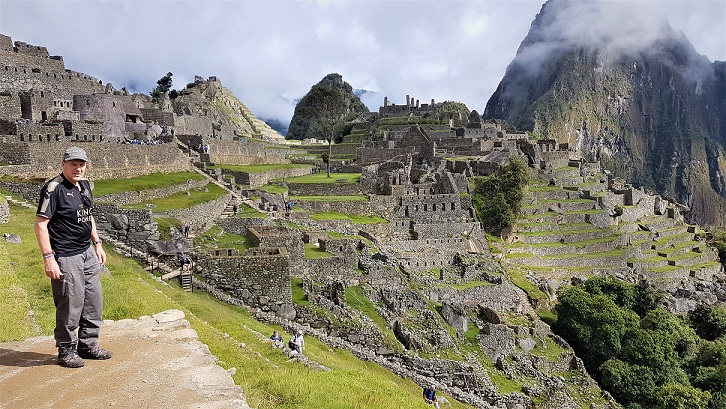
David showing Machu Picchu
Whilst at the centre rear of the site on the upper level, next to the “Compass Rock”, David, Sue, Scott & I take a well-earned respite on a sitting rock at the Western side. Photo courtesy of David again. Behind our backs is a small ledge then a massive drop to the valley below (don’t look down). In order to not look down we note the huge mountains in the near distance and some much higher in the far distance with snow/ ice caps. On the nearest mountain behind us there is a modernised Hydro Electricity system with pipes and pump stations on a major scale running down its slope. Obviously providing electricity to several townships or even Cusco to some extent. There is so much water off the peaks to capture and there still remains lots of water chasing down from these mountains not into the system. In enjoying this respite, we chat about what we have seen today and at the same time looking back up to the Sun Gate and to the elevation we had travelled and over to the alpacas peacefully grazing at locations away from the numerous tourists on the different terrace levels. Such an amazing place.
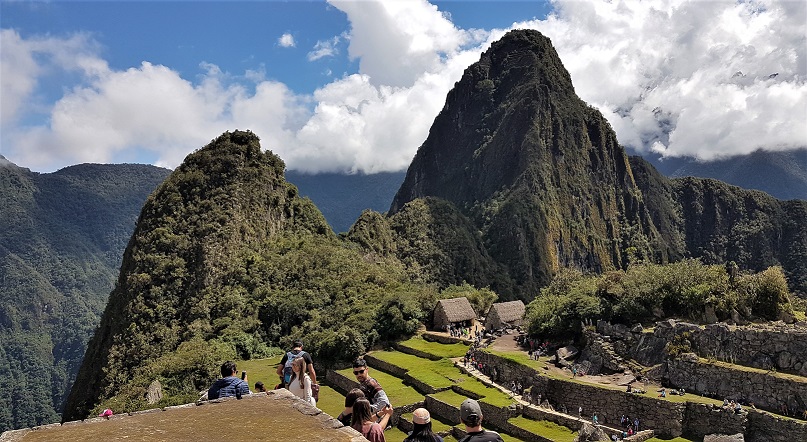
Rear of Machu Picchu 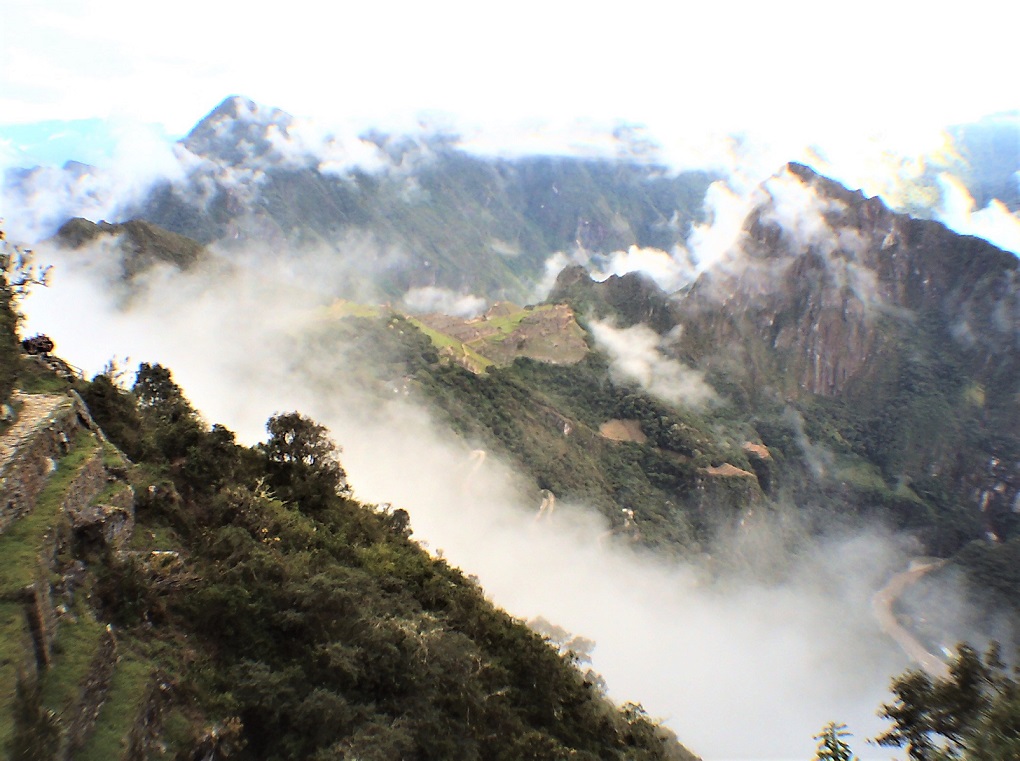
Machu Picchu with Clouds 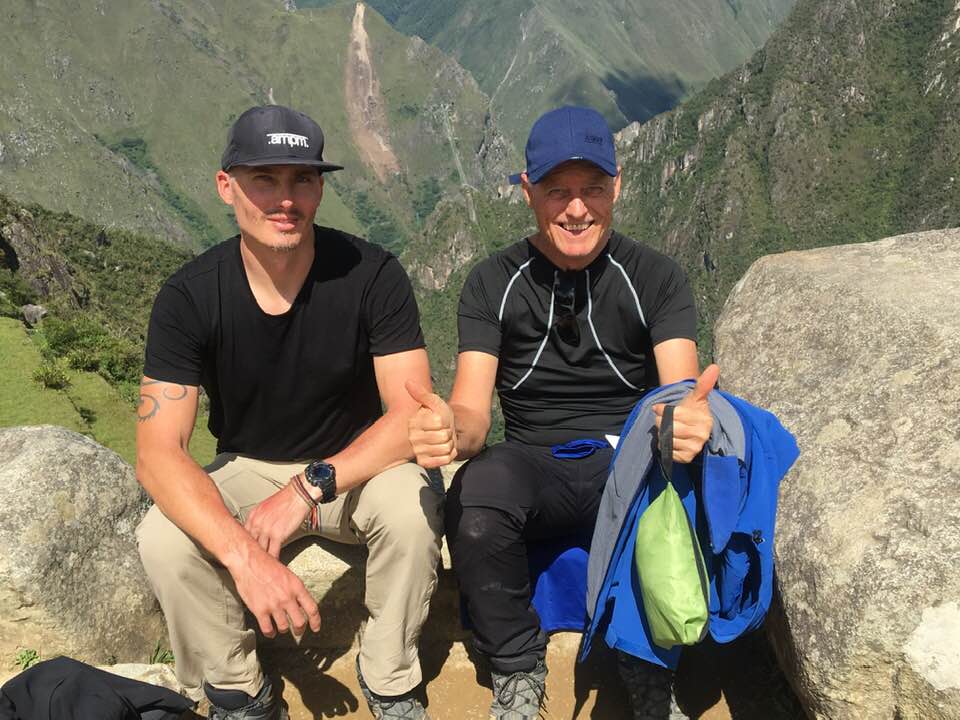
Scott & I
Respite is over and we continue to a tight width rock staircase to a higher peak possibly for the Inca Sun worship and some sacred stones placed there. This small peak some 25m in elevation provides a great view to most of Machu Picchu however, you cannot stay there long and then directed down by Govt Guides to another staircase to a separate area to the rear of the site. It will take a while to journey back to this location if you wish to view this area again.
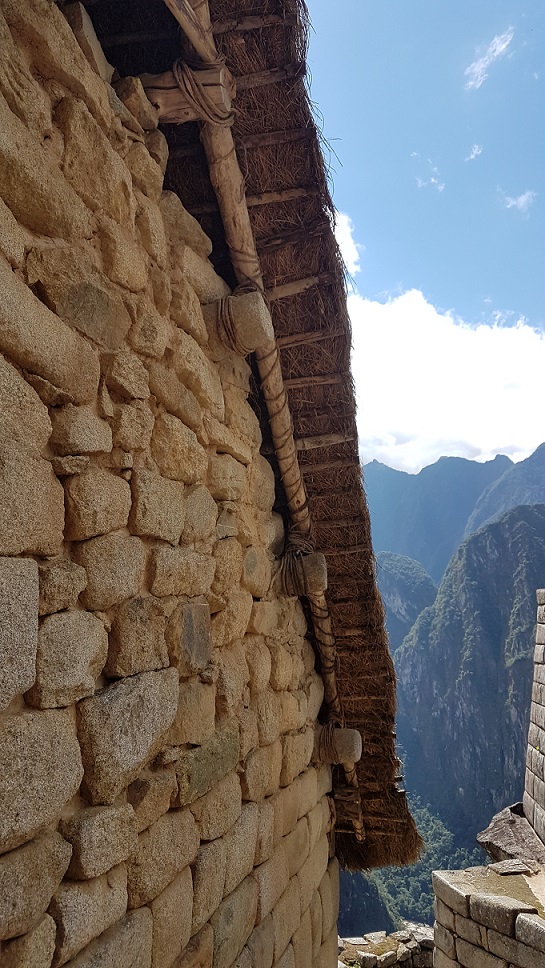
Following on from this other staircase we find ourselves at the full rear of the site to a few buildings where the Peruvian Government has restored the roof structures with tree poles and straw thatched roofs to show the full structure intact. The straw thatched roof coverings have to be replaced every 2-3 years due to the severe annual environment. The tree poles form the rafter system and they are tied by vine ropes to stones penetrating the walls at the wall corners and at varying heights towards the centre of walls.
We wind along narrow pathways and follow the signs that will lead us to the exit. It still remains a bit of a maze of walls and stairs. The sheer size of the entire complex provides a rough indication as to how many Incas resided here and it is such a credit to a civilisation so many centuries ago. Reluctantly, we continue to the pathways leading us back into the tourism complex and along the way you can notice the day tourists have a sense of being at a theme park such with their attitude and their movements. Very depressing in seeing some of this form as it shows a disconnect and a throw away sense of the magnificence somewhat discarded. A bit harsh .. but after enduring 4 long days we have an added attachment and deeper respect I suppose.
Stepping through the small exit gate the crowd is certainly noisier than before and with that, much more crowded. Here, there is a strong sense of a theme park; especially when the line up for the shuttle buses is getting longer by the minute and the restaurant and café are still doing an enormous trade. First, we must recover our backpacks which does take a while. I’d love to see behind the wall as to how they incorporate a system of storing bags .. or is there one? Again, I omit to remember my GoPro.
We form the populated line and it appears there is approx. 40mins turnaround for each shuttle bus, hence there is a large number of buses winding through the road network to the city below and back. The queue becomes slower and then we notice people who have come for the day trip are now buying their return tickets at the booth and that’s where the line goes into the cattle style barriers to the buses. They are jumping ahead of about 100 people unnoticed however upon noticing this a security guard now places a member at the booth to redirect them.
Finally, we are on the bus, albeit, we are saddened to leave Machu Picchu so early with plenty of daylight left as it is 12.30pm. We must be at a nominated restaurant in Aguas Calientes asap to order lunch and to meet the group and the guides for the last time. The bus trip takes approx. 18 minutes and drops us off at the junction of the main street. With no knowledge of the address of the restaurant we were gratefully greeted by Bryce and Eliza who was wondering where we were.
Everyone was there except the Utah group so we started to order food and catchup with today’s conversation. It was quite difficult as were sharing the space with a much larger and much more vocal group. Ronny tried to quiet them down but that failed. They were so inconsiderate. As our food arrived the Utah group arrived with their excited trek details but confirmed it was very tiring but well worth it for the views. Eliza wanted to be a local so she ordered a Guinea Pig meal. It came out whole and that enabled us to swerve in our seats so as not to witness it or even to take a photo. Eliza was not happy with the meal as well. Very tough and not palatable. Totally intact with hair still on the paws, etc. I couldn’t bear to investigate further, along with Scott. We stuck to our Vegetarian Pizzas.
With great happiness we all exchanged our names, emails, etc and then provided our tip amount to our Guides to share 3 ways. It was difficult to express our speeches due to the very noisy group close by.
David and Sue waved goodbye first as they had the luck and good planning of the earlier train back to Ollantaytambo, then bus to Cusco, arriving about 6pm. Our train didn’t leave here until 6pm so we are expecting a 10.45pm arrival in Cusco. The Utah group were staying overnight so there was no hurry from them. We all thanked Ronny, William and Edizon and proceeded separately to find another place to relax and then ultimately, the train station. Sadness is always felt when good byes are in order. No doubt social media will prevail to reconnect and relive this wonderful life experience. We carry great memories with each of us. Unfortunately, videos and photos from my GoPro are lost forever.
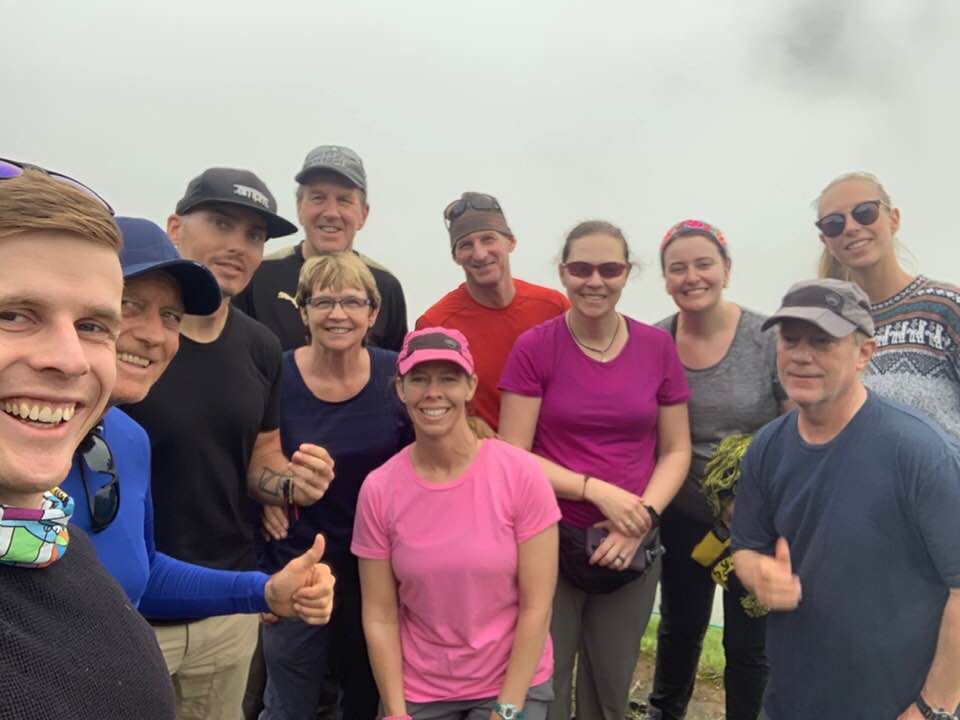
Trek Completed
Next blog will be Post Machu Picchu & then onto massive volcanoes
Footnote 1
Machu Picchu was rediscovered by an indigenous farmer, Melchor Arteaga, well before the American historian, Hiram Bingham came across it in 1909 or thereabouts. The farmer had previously advised 2 or 3 other families years before that there was a structure where they could live and survive. It was a tough time then for families to survive and grow crops. The farmer was later approached by accident by Bingham and with a few hands made their way towards this stone complex using machetes as it was firmly into the Amazon Jungle now. Here he was met by one of those farmers residing in a hut nearby who sent his son with Bingham to discover magnificent stone walls overtaken by vines, bamboo & the like. The Spanish invaders NEVER found Machu Pichu and spent years and resources scouring the countryside as they believed no-one could survive living at the high altitudes and concentrated primarily around the Urubamba River regions.
Bingham later returned in 1911 after advising the archaeological world for funding then it was officially proclaimed found on 24th July 1911. Trains linking to Cusco are called the Hiram Bingham Train and signed as such as he is much loved for making this area and Machu Picchu famous. UNESCO officially proclaimed this special site in 1983 and covers the site area of 32,592 hectares but also encovers an extended buffer zone.
Footnote 2
For 2019, Machu Picchu is set to change forever. There is a push to rename the city, Aguas Calientes to Machu Picchu City. Secondly, the Peruvian Government is set to cordon off more sections of Machu Picchu to preserve these areas from the public and maybe further limit the daily numbers of visitors.
The most significant change is the construction now started on the 2nd regional airport at the nearby township of Chinchero with bulldozers underway clearing the required land. Cusco International Airport will not cope much further into the future with only one runway and limited space so it was decided to place another airport closer to Machu Picchu near Chinchero.
The airport will bring all different types of aircraft (small & large) flying the flight path at varying height levels especially over the very quiet township of Ollantaytambo and the Sacred Valley. With the Andes Mountains the flight path will be restrictive so the now quiet areas of these townships and Machu Picchu will be severely affected plus the predicted high volumes of tourists treating the area as an enormous theme park. The decision of the airport was made over a few years however, the world is now starting to protest. How the airport passes the UNESCO criteria is still a mystery. The airport is expected to be operational sometime in 2023.
Currently, most intercontinental flights require entry to Santiago Chile then onto Lima Peru then onto Cusco however some airlines can now fly from Santiago direct to Cusco.
I’m thankful for undertaking the trek in the situation now found, rather than what is predicted and even more pleased by doing the 4 long days and 3 nights to fully encounter the stamina, beauty and magnificence of the great Machu Picchu. We were so blessed with the weather too and with a wonderful group and great guides/ porters.
 BH Life Travels