Day 1 in Rome – 2/10/2025
OK!! I’m now in Rome city (Historic Quarter & my first EVER day in Europe) 9am after my expensive train from the airport (Blog 1) & my first project is to find a café, for coffee & to use their WiFi as my Saily Data package has not evolved as promoted to me. Using my data provider on my original Australian Network will incur an obscene charge per day so I’ll persist in seeking out a better solution. I am without the internet & everything else. A wonderful café opposite to the Rome Termini (Central Station) was Sfizio & they were superb. Everything appeared to kick in on my phone with Saily once the WiFi took hold. I could now confirm where my hotel is (not far) but upon leaving Sfizio & a block away, I again had no internet. I finally found my hotel Bettoja Hotel Massimo D’Azeglio without Google Maps & left my bags at reception (too early to check-in) & took a map they had at the counter, as I had a Patheon Tour (Italia Explorer) booked for 2pm @ $21.84AUD. With plenty of time I headed off, but the map reading was all over the place. The thousands of people & tourists made walking the streets bloody hard & I found myself doubling back several times & not quite int the direction needed. The street signage was in a level of crap of small writing & not making sense!!! Really out of my depth.
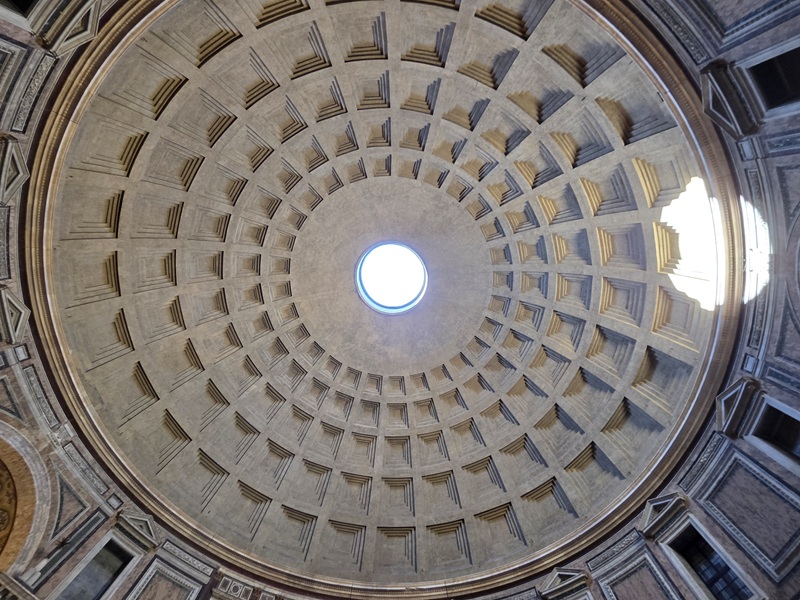
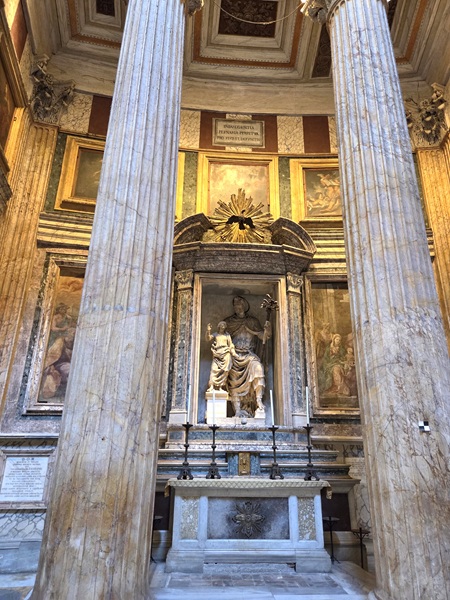
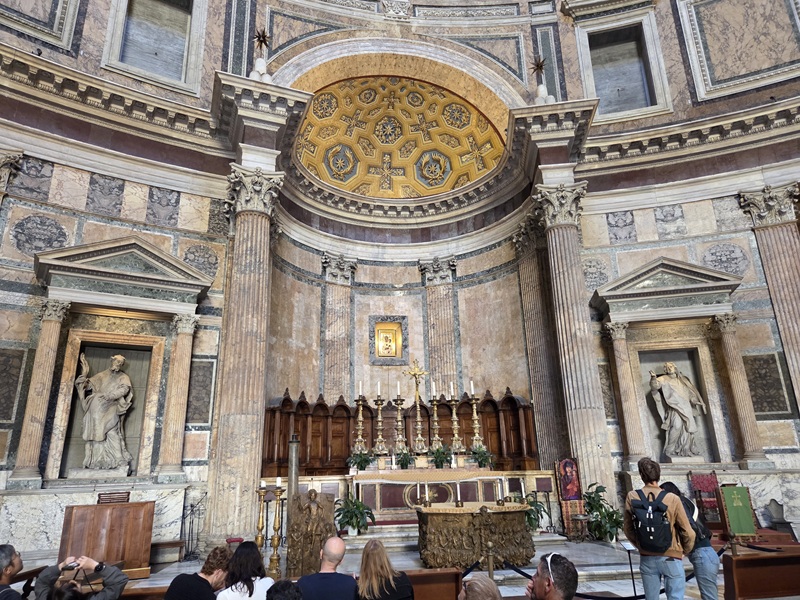
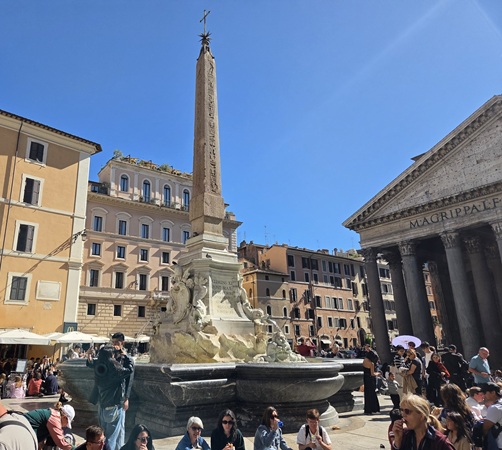
With frustration mounting (I had already done about 6klms of walking) & by the time I had found The Pantheon & my guide before the required deadline. He helped by putting me straight in (skip the line booking) which was a huge bonus instead of waiting for my designated time. The Pantheon was truly amazing & I can’t believe how this construction was carried out back then. The front 16 stone columns each weigh 60tons & were hand crafted in Egypt & shipped over. They used up to twelve elephants to erect each column. When inside, the wonder continues with great stone sculptures, arts & the world’s largest concrete dome of that type above us. The dome is 43.44m (142.5’) in diameter & is the largest unsupported concrete dome in the world & has had the record for over 2,000years (125AD). History does not record who built it, but it started in 27BC & was rebuilt to finish 125AD. The circular walls are 24’ thick & the entrance doors are bronze at 24’ high with an opening of about 14’ wide. The open eye “oculus” of the dome is a whopping 27’ in diameter & hardly any rain falls through it. The floor has a 1’ slope from the centre to accommodate any rain that rarely comes through it. For centuries experts could not prove the components of the true Roman Concrete of that age. The recipe had been lost long ago. With the latest technology used on original foundation footings still present today they found the vital ingredient which was the ash (white & grey pumice) from the eruption of Mt Vesuvius in 79AD over Pompei, etc making it the strongest concrete ever.
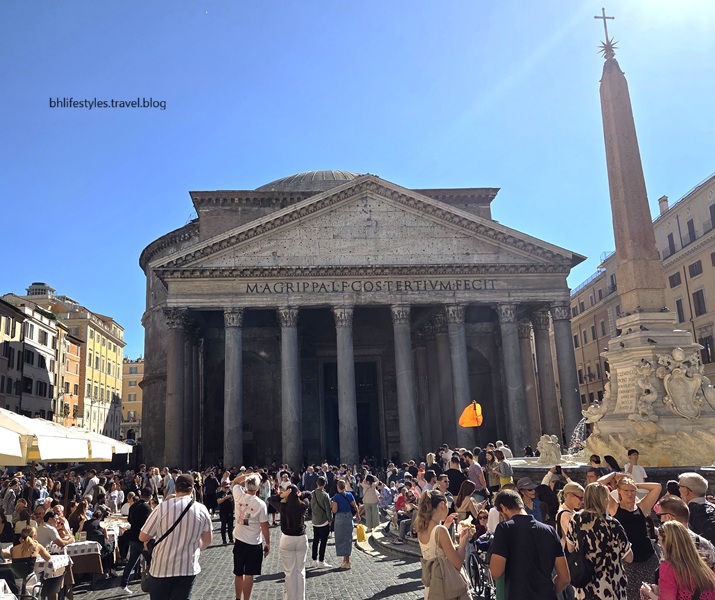
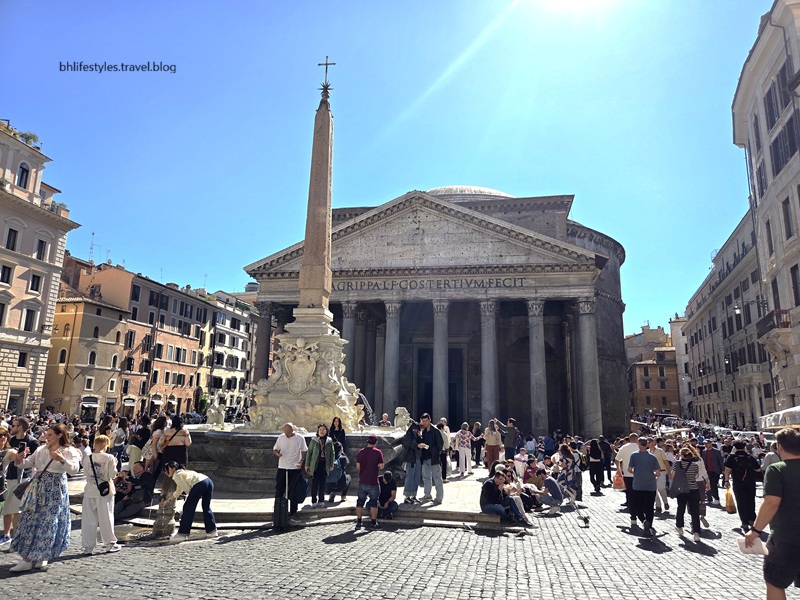
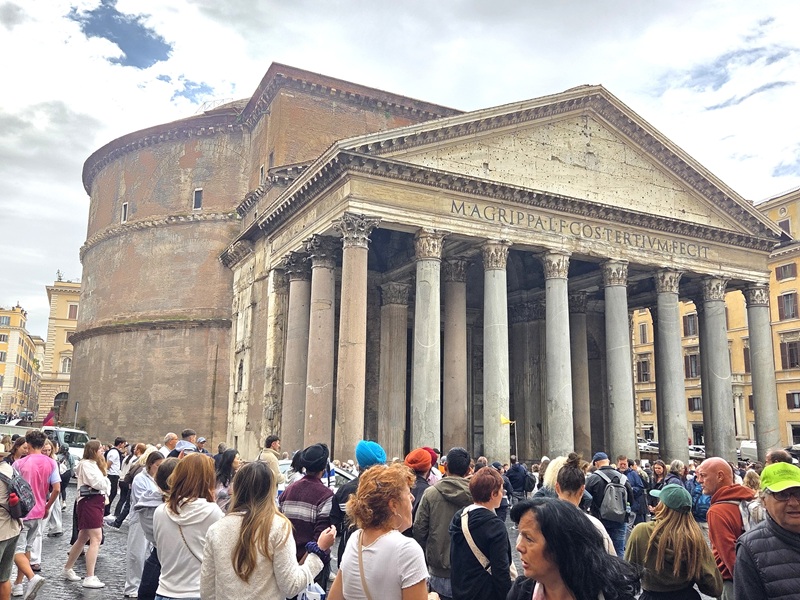
After the Pantheon I found another café with WiFi & contacted the Bot in Saily Support where the AI really can be scary .. so human like in answering & it diagnosed my phone was cutting in & out with the Airplane mode. After a few interactions & waiting the required seconds on the mode setting Saily cut in fully & no more problems after that so it was easy to find my way back to my hotel. I am now aware the Airplane mode can be erratic. My Samsung Health App notified me I had walked 23,705 steps equaling 18.56klms if you don’t mind. Yikes!!!
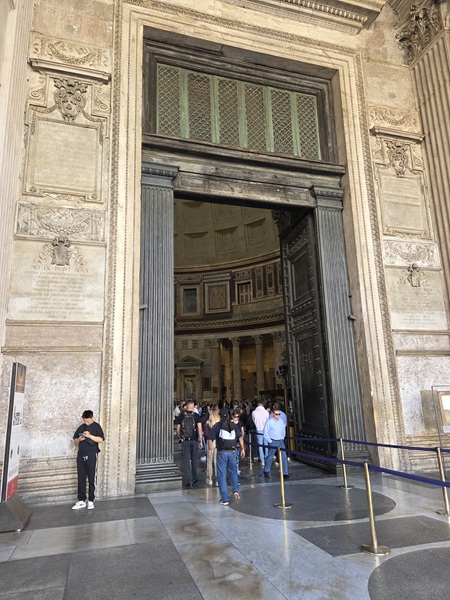
Upon returning to my hotel, quite close to the Rome Termini Station (Central) I was quite shocked trying to convince the reception staff on my check-in stating they had my bags in storage that morning. Finally, the staff realised I was in the wrong Bettoja Hotel, which was directly across the road from my Bettoja Massimo D’Azeglio. I was informed the father Bettoja had 3 hotels & upon his passing, each of his 3 sons inherited a hotel each & they are near each other (Mediterraneo was opposite & Atlantico on same block but further down). They are stunning hotels & had better get my attendances right over the next few days. LOL!! Finally settled into the night & sorting out my 4day stay & to get ready for my early morning Colosseum tour (1.5klms, 18mins walk away from my hotel).
3/10/25 Day 2 The hotel delivered my brekky right on time so heading out in the late dawn went very well. After lunchtime I must walk from the Colosseum over the River Tiber to the Vatican (50min walk, 4.1klms) for that tour. A HUGE day of course. My Colosseum, Roman Forum & Palatine Hill Areas Tour by Crown Tours through Viator, was for a 9.30am start where the meeting point was 20mins walk away & I detest being late for anything. It is critical to organising an early morning tour, as by lunchtime the volume of people at the Colosseum is beyond ridiculous & the temperature is more comforting. Our guide was Annalisa, a documented archaeologist who apologised frequently in confirming a lot what we have been shown & taught are so out of touch to the real history we may become upset or disillusioned. The Gladiator movie was an example where it was more of Hollywood illusion of course.
After the viewing in awe of the Colosseum structure as we walked closer for its massive size you notice a side section is missing of its upper decks. This was due to outside thieves or colonies stealing the blocks of limestone/ travertine blocks for their other infrastructure which was an ongoing crime as building resources & workers were hard to get. The other side of the Colosseum was inhabited by a large village; hence blocks couldn’t be stolen from there. Due to the ‘vandalism’ it weakened the structure & when a great earthquake happened in 1349 & some of the fallen debris eventually was used to build hospitals, palaces & other structures. In a lot of walls of blocks, you can see small holes chipped into the blocks where the rare steel metal joining spikes were removed for other structures in time. This also weakened the walls.
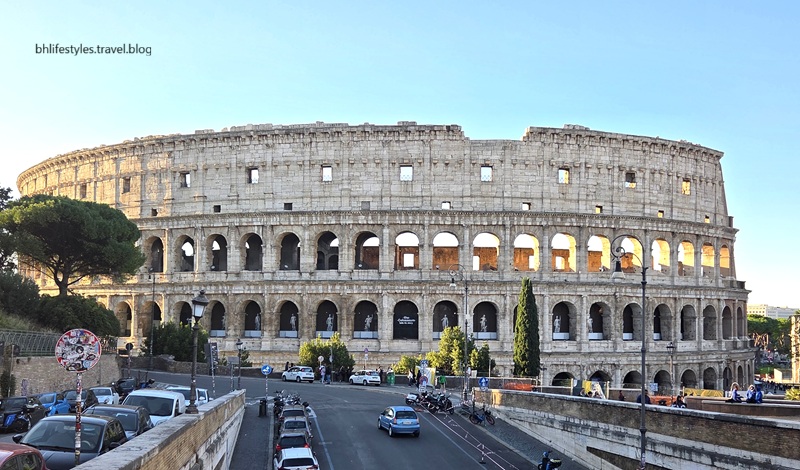
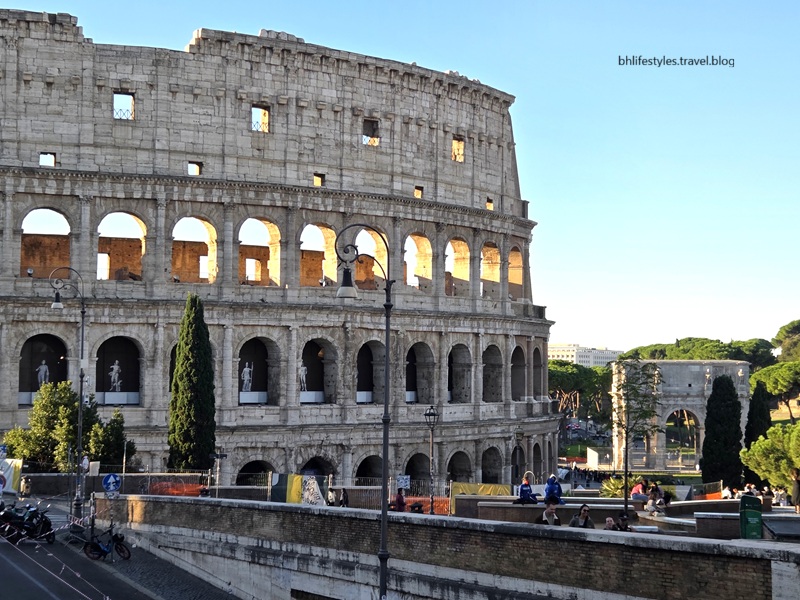
The Colosseum was built in just 8yrs (72AD-80AD) using over 100,000cubic metres of stone & Roman concrete. After the fall of the Roman Empire the Colosseum was abandoned & fell into disrepair. The arena was a timber floor supported by numerous brick walls as per my photo. Sections of the floor was raised vertically by means of the adjacent aqueduct system that hydraulically lifted the selected platform for better public viewing when required. The underfloor structure, known as the hypogeum, consisted of numerous alleys of brick walls & cages where animals were caged for hunting performances. The next fighting gladiators were housed there just before their fights were to take place. The remaining gladiators were kept longer outside the Colosseum for relief & training & entered the arena underground by a tunnel. Gladiators were well paid by their schooling master’s & not killed merely for sport as per the movie The Gladiator. Their surviving skills kept them in a good financial status, but no life was long in Rome those days but not every gladiator was eliminated, unless they were poor performers.
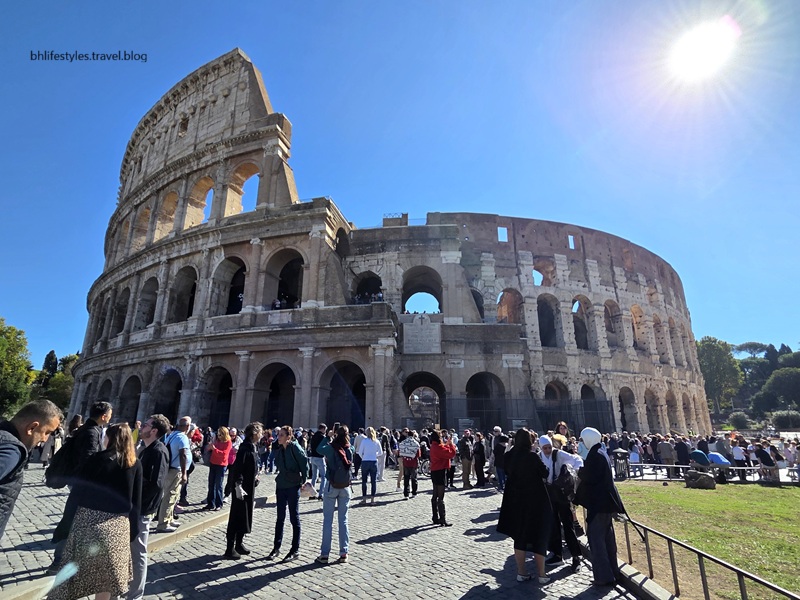
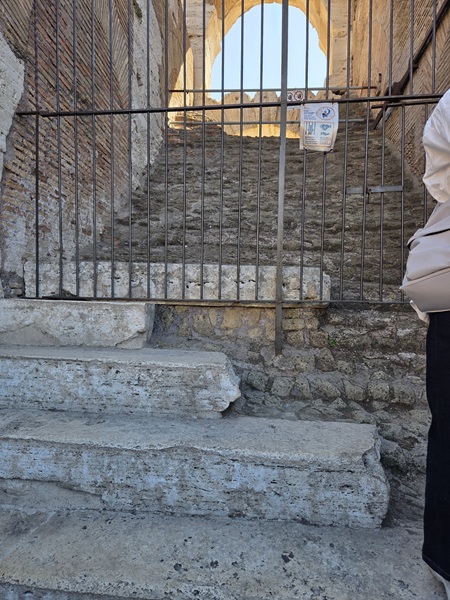
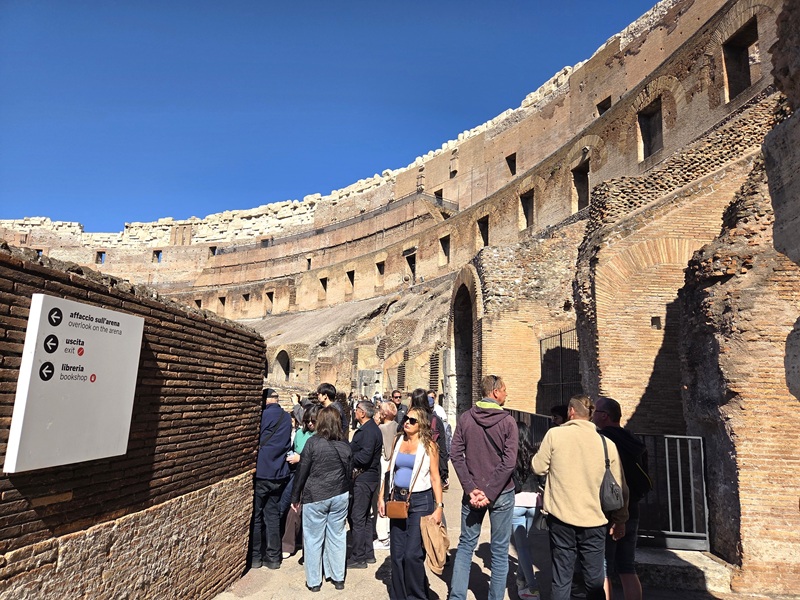
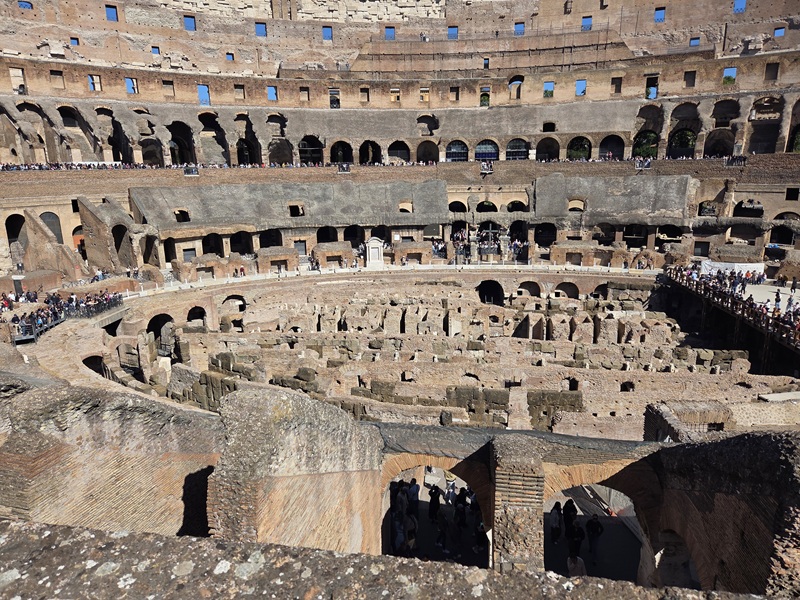
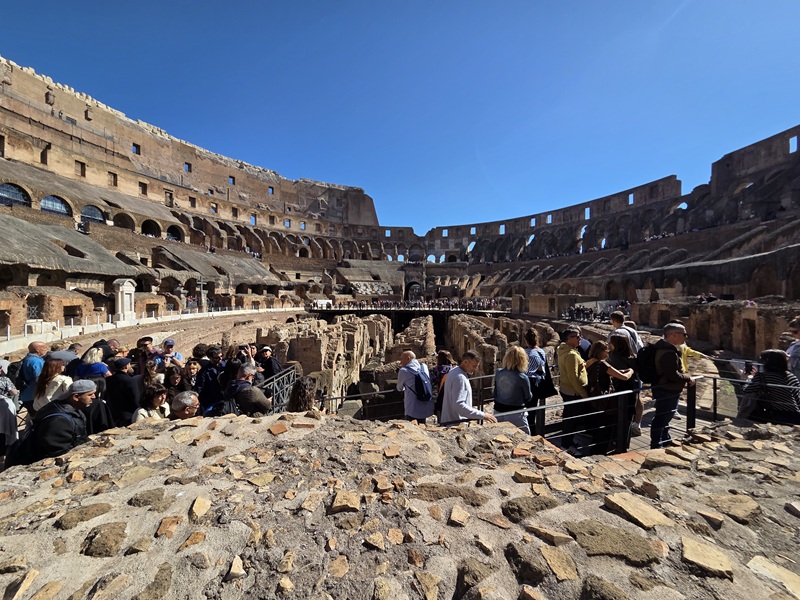
The arena floor was also treated with a small layer of sand for the shows to reduce the effect of blood volume & slipperiness, mainly from the animal kills & not so much from any gladiator kills. Animals were hunted & slaughtered far more than any gladiator. If you look closely at the interior photo you can manage to see there were 5 seat terraces (see the staircase remains) where they placed all the lower-class people up onto the highest level, for their role was to cheer the loudest & to confirm if the losing gladiator was to live or die. The decision was decided by the volume of the cheering, not the emperor’s, thumbs up or down.
Everything you view is of a grand scale & it is hard to understand just 8yrs to build. On the eastern side, when you walk around you can see the original Rome floor was some 7m below the current ground level. This area would flood so over time the romans would build over what the floods provided with more soil making it now 7m above.
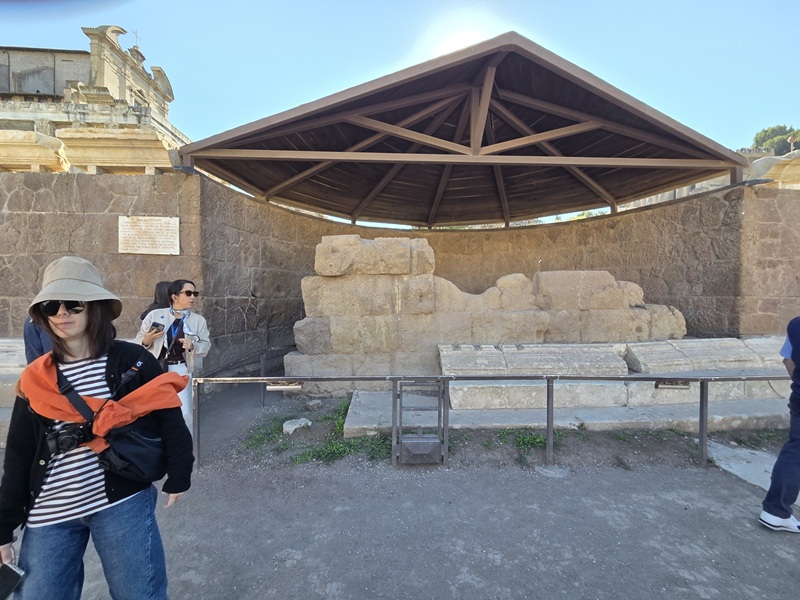
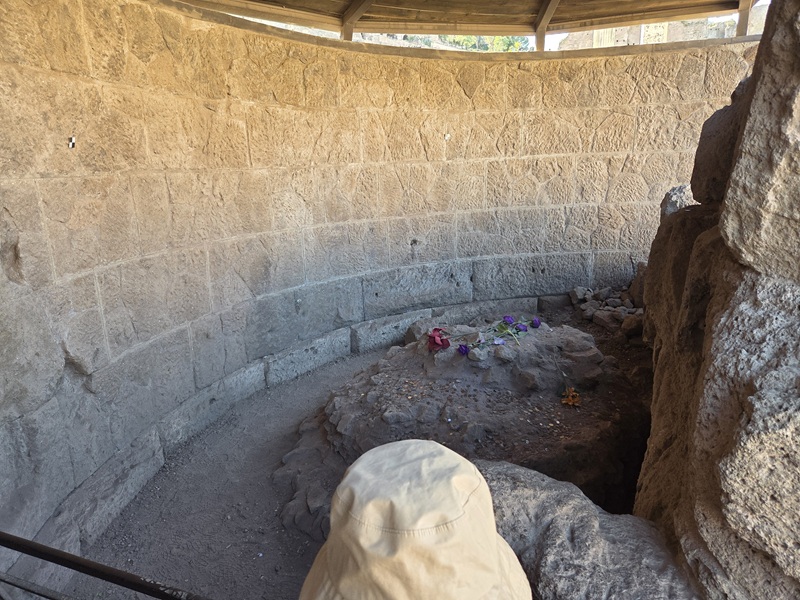
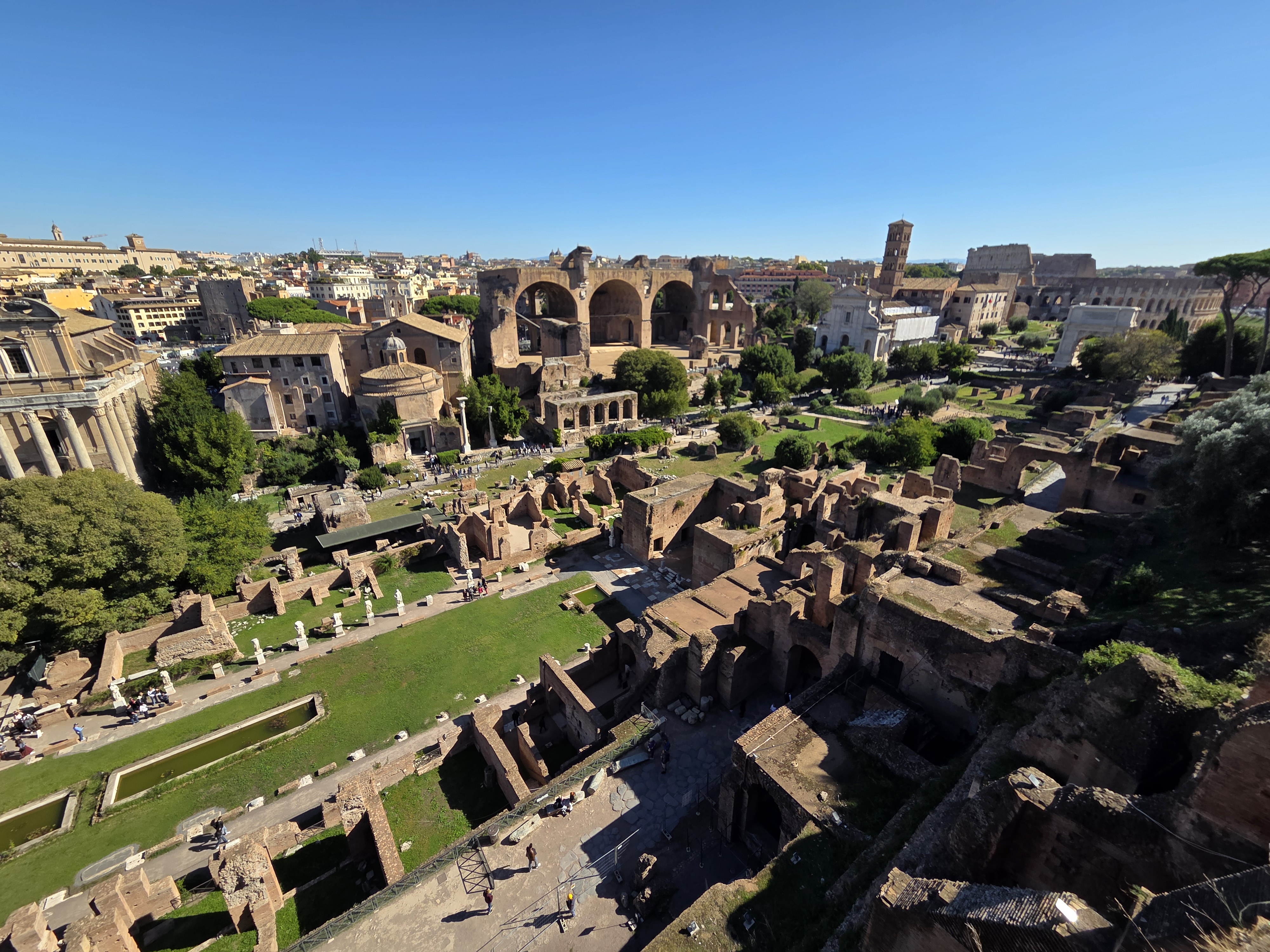
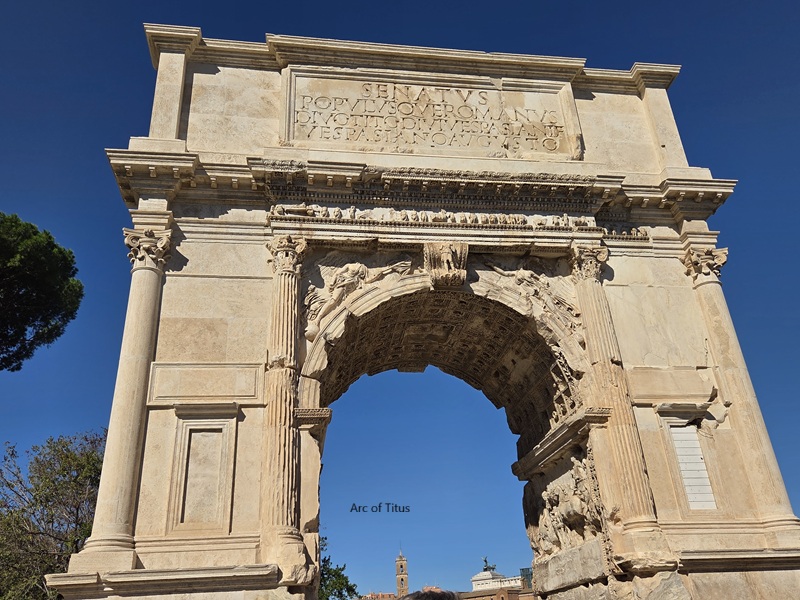
On the same side you can see the remnants of the high-level aqueducts that fed the water into the sub floor of the arena area for the hydraulics to work. The sub-floor would be flooded for approx. 1m deep. This again is confirmed when you venture adjacent to the Colosseum on the western side called Palatine Hill which also shows more intricate structure history including aqueducts over this expansive area. In the lower area, there is a small, curved wall with a new protective roof over it & this is where Julius Ceasar was assassinated by a stabbing. There is far too much history to type, discuss & take photos, so you must come to Rome for yourself & it would be a bonus in scoring our guide, Annalisa who is a walking encyclopedia. Enjoy the photos & look closely at the detail.
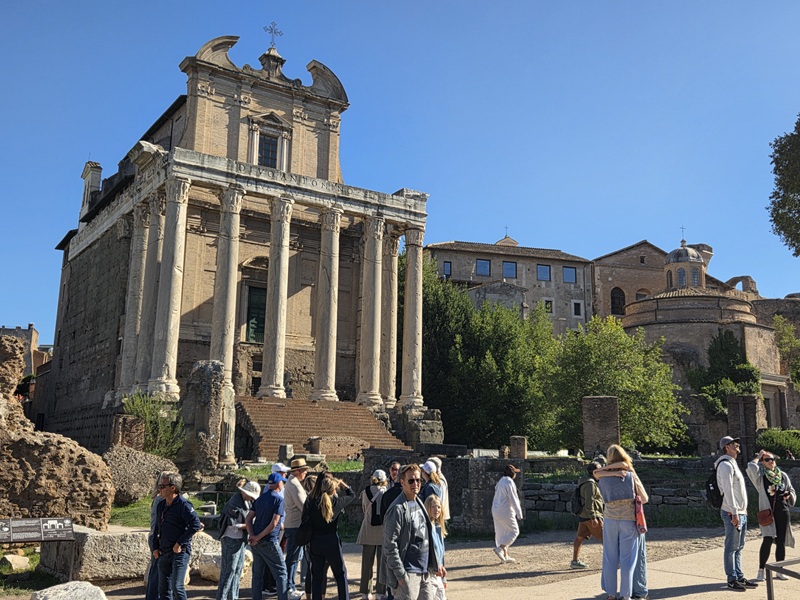
I’ll end my 2nd Blog here & many thanks for reading them. My next blogs will have far more pictures & of major significance of the major sights of Rome starting with the Vatican. Please stay safe, happy & healthy.
 BH Life Travels