Bristol – 04/11/25
Another great morning brekky by Sue & she has a big day planned for me. Dave has other commitments, so it’s just us 2 for the day. Sue said to trust her driving & I was glad she was doing the driving to navigate the narrow road system. The landscape certainly was breathtaking.
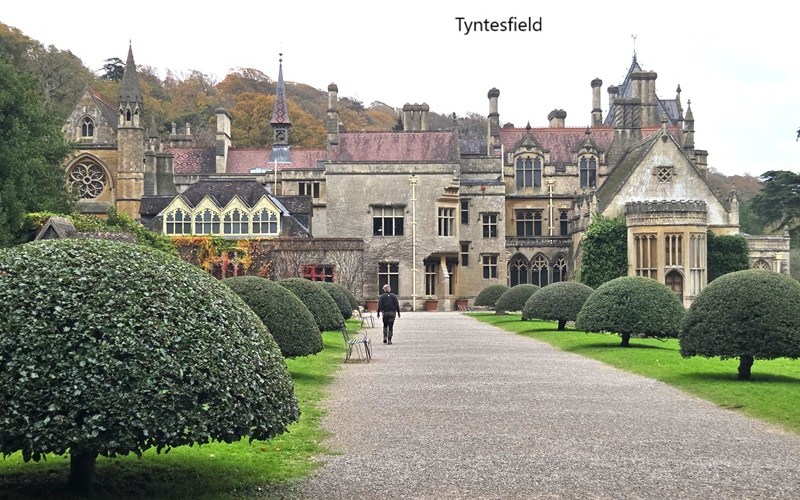
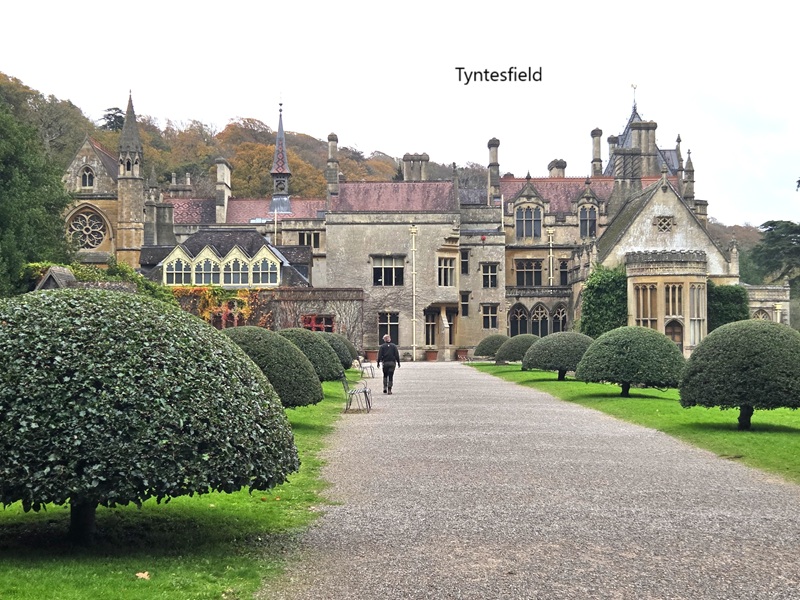
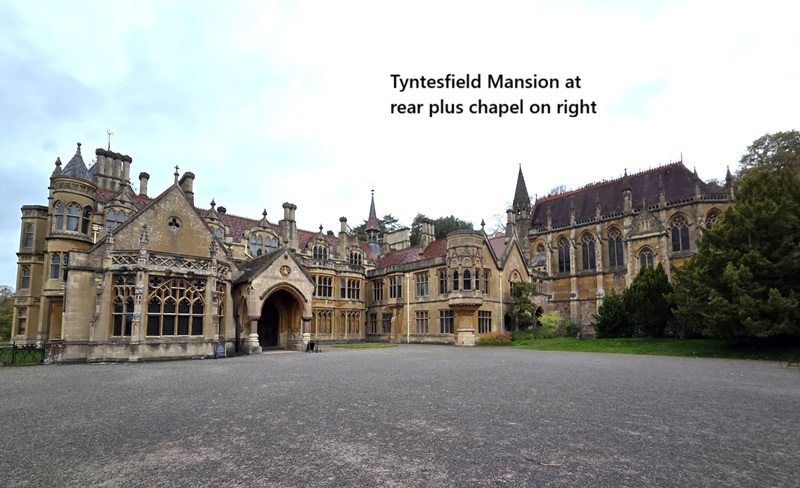
First of all, we head near Nailsee, but really Wraxall, for the huge grounds of a Parks Heritage Trust of an old mansion & grounds called Tyntesfield. This mansion & grounds are amazing (540 acres of grounds) & now well protected under the heritage act. Sue absolutely loves this special place and visits often, with friends & shares a coffee catchup using her heritage Tyntesfield Member Card. Unfortunately, there are things happening in the mansion, so no public access today. Sue was so disappointed hearing that & now no chance at all of seeing the wonders internally but we had a great coffee & sweets catchup in their cafe. Of the insane grounds & mansion, one could only imagine what lies inside the mansion to see.
William Gibbs was the original owner (1790–1875) after purchasing adjacent houses & grounds & converting to building the mansion, a merchant who made his fortune in trade with Spain and South America. In 1842 the Peruvian government granted A. Gibbs & Sons licence (Father Antony {died 1815 with massive debts} & eldest brother to William, George) to export guano (nitrate-rich seabird droppings for fertiliser) to Britain & the fortunes grew astronomically. In 1842 William was the sole heir when his brother, George died. In 1860s William & his wife, Blanche transformed Tyntesfield to a Gothic Revival Style & then undertook the interior design. William passed away & he had a chapel almost completed by then, attached to the mansion. Inside the mansion William had over 72,000 artifacts on display from his world journeys & businesses. Antony Jnr later inherited Tyntesfield in 1887. Over the years & with a complex family beneficiary setup Tyntesfield was ultimately sold & The National Trust bought it in 2002 & opened it to the public for viewing after only 10days.
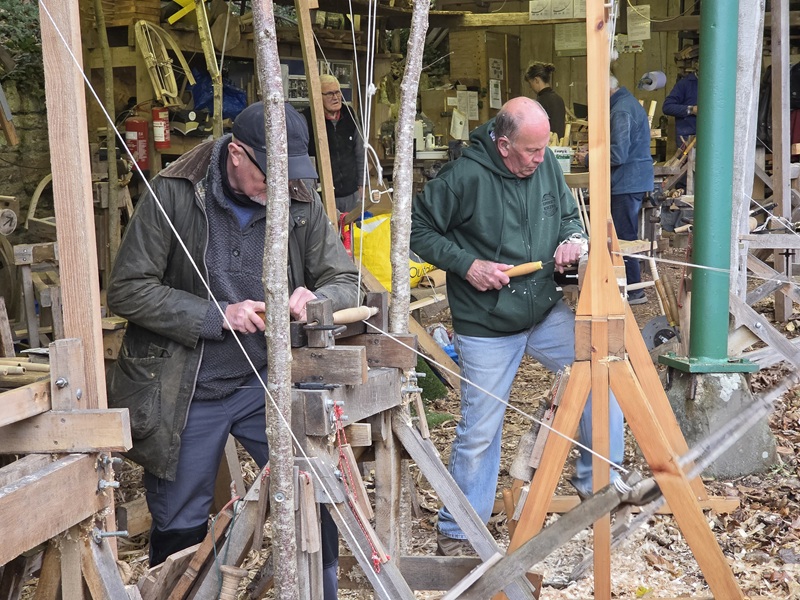
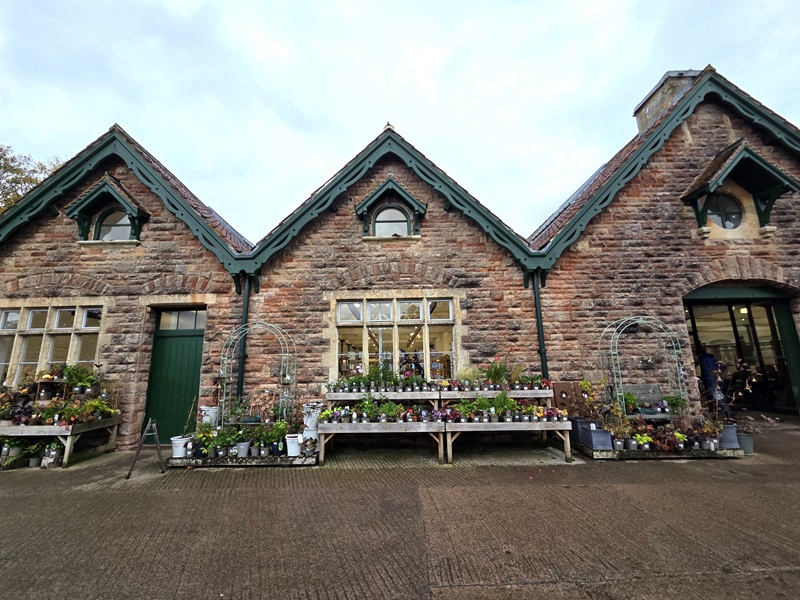
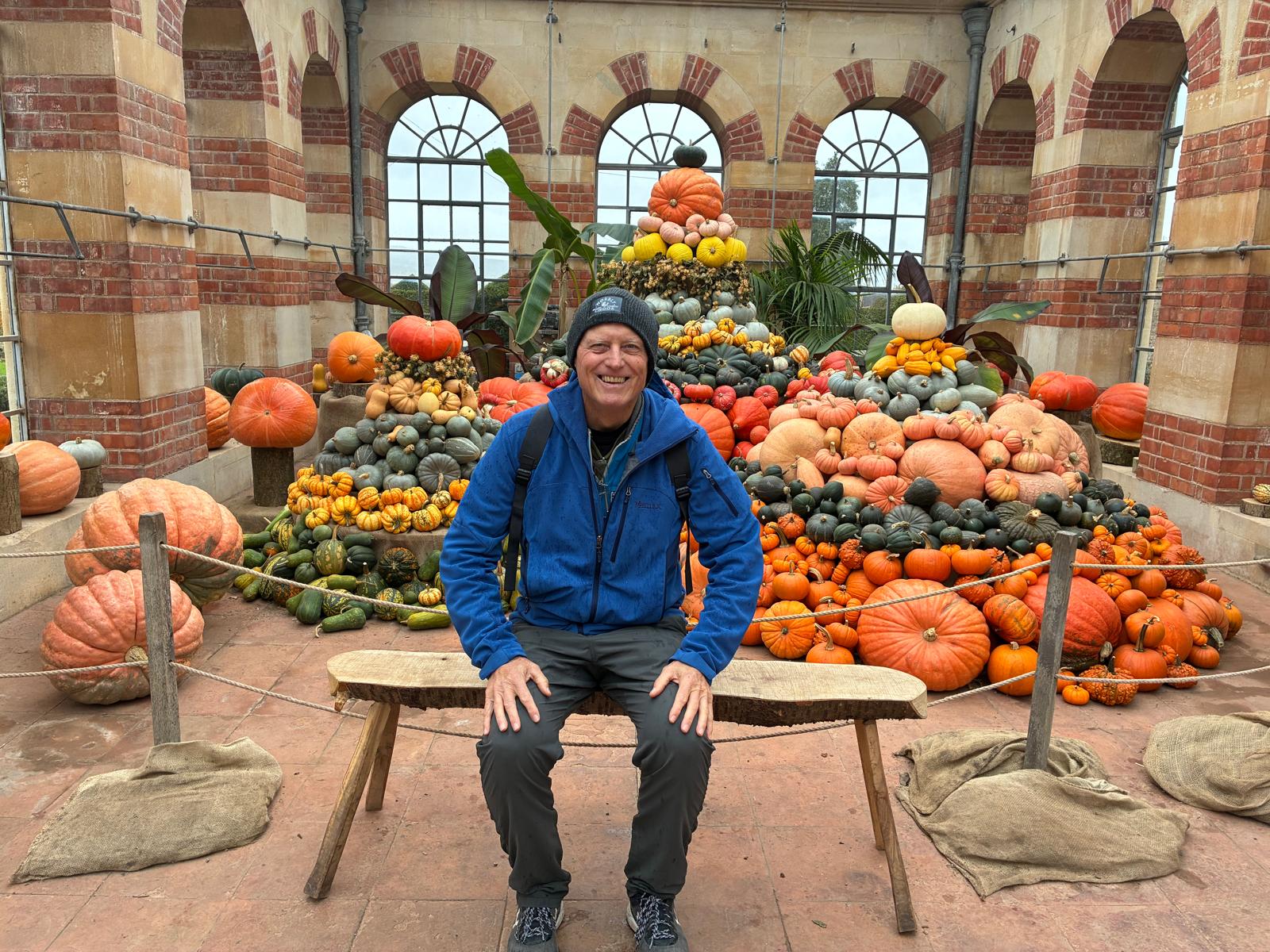
We spent quite some hours exploring some of the grounds including the Man’s Shed (ex-stables) I called it for the old wood turning shed with feet push lathes. Being a carpenter by trade I found this quite interesting & had a good look at this area in detail while Sue gave me further commentary. Sue took a photo of me in the vegetable & florist nursery & everything is done at Tyntesfield in the highest of quality & detail. This historical facility is well worth the visit & so thankful Sue enabled me to see this local wonder.
The next stop Sue had planned is back in Bristol to view the SS Great Britain, a steam ship which was the largest passenger ship in the world (3,300tons) at the time at 98 metres (321 ft) in length, SS Great Britain sailed on its maiden voyage from Liverpool to New York in May 1845. SS Great Britain was designed by a young engineer Isambard Kingdom Brunel (from my last blog who also designed the Clifton Suspension Bridge).
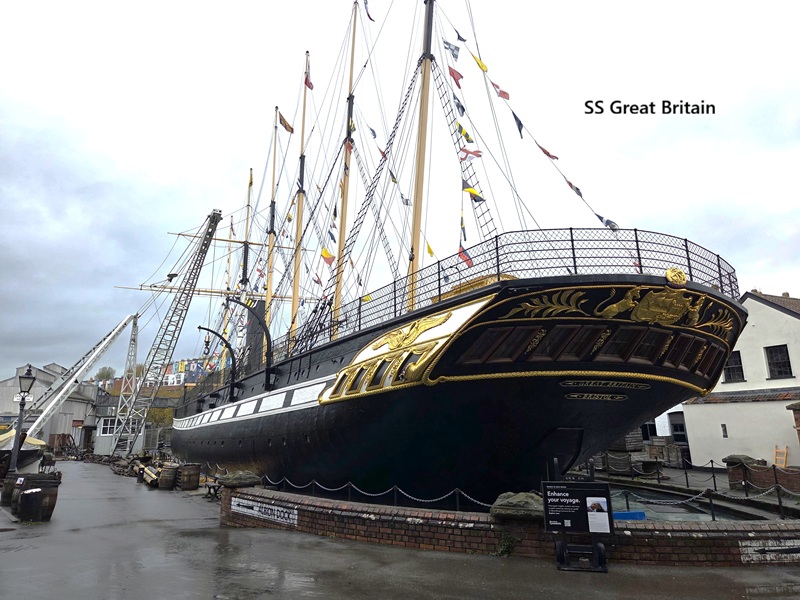
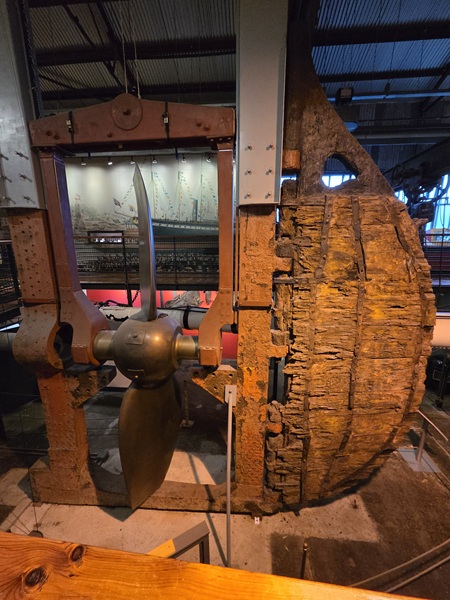
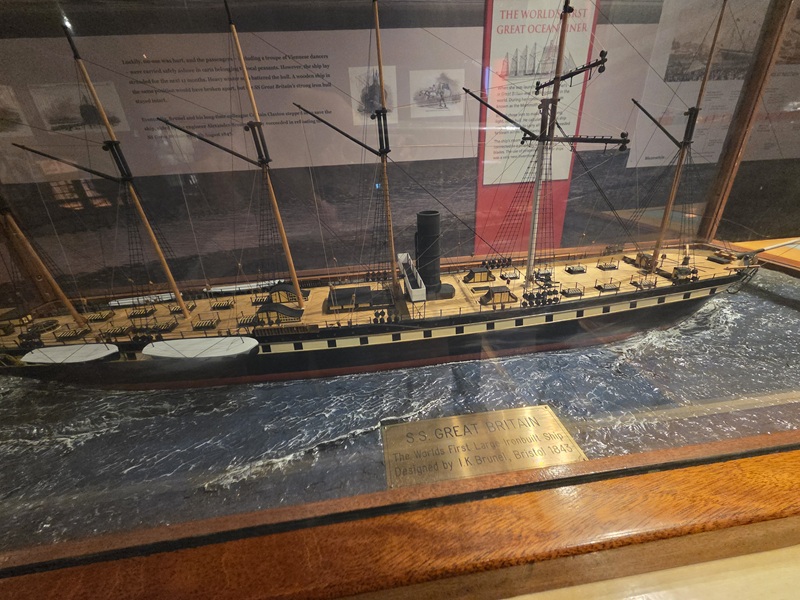
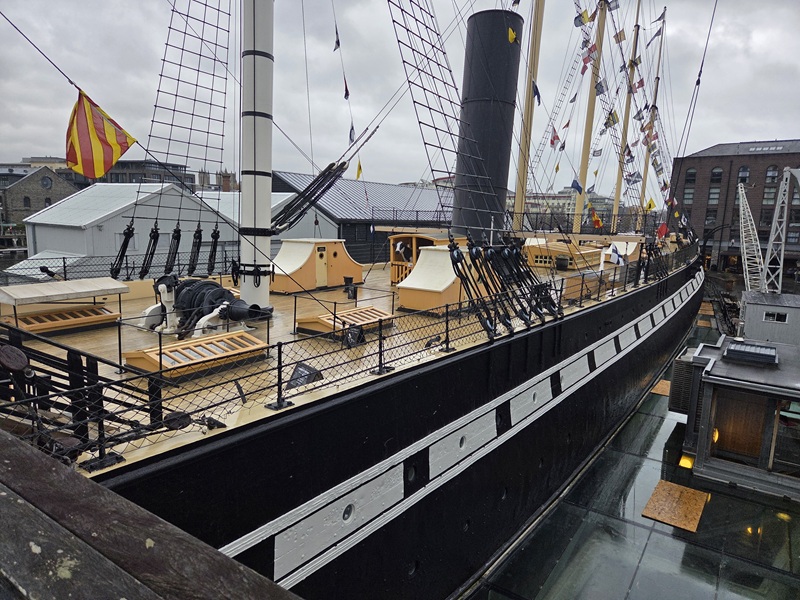
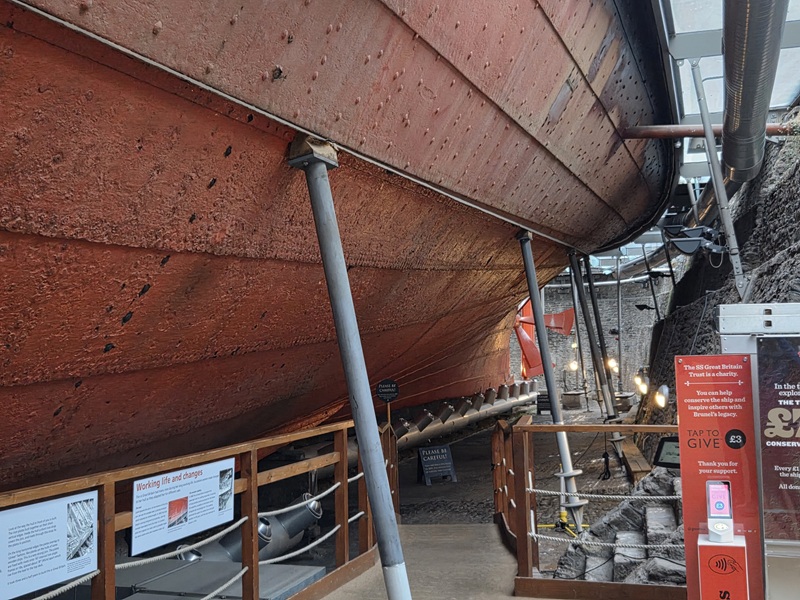
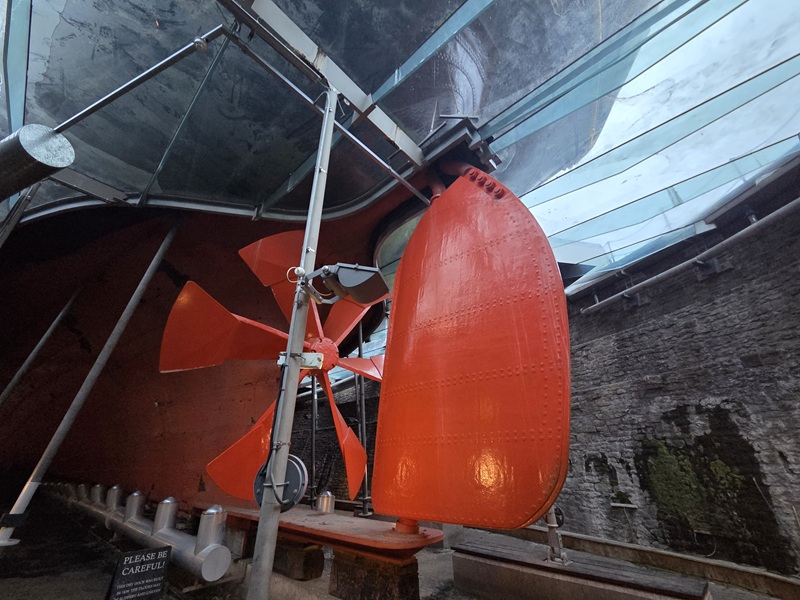
Brunel designed a very innovative giant propellor system (measuring 4.7 metres (15 ft 6 in) across) rather than the traditional paddle wheels, although it also had six masts for sails when conditions were favourable. It had a full iron sheeted double skinned hull with far too many rivets to count. The ship made several crossings of the Atlantic, averaging 13-15 days per voyage which was a massive result. Unfortunately, on its 5th Atlantic crossing (September 1846), the huge ship ran aground in Dundrum Bay on the northeast coast of Ireland after the captain used a faulty chart and perhaps suffered from a faulty compass. All passengers & crew embarked safely. Ultimately, SS Great Britain was placed into auction. There were no interested buyers at the reserve price of £40,000. In the end, the ship was sold to Gibbs, Bright & Company in December 1851 for around £18,000, one-seventh of the cost to build the ship. Completely refitted, the ship took one more trip to New York and then was used as a passenger liner sailing regularly from Liverpool to Melbourne, Australia.
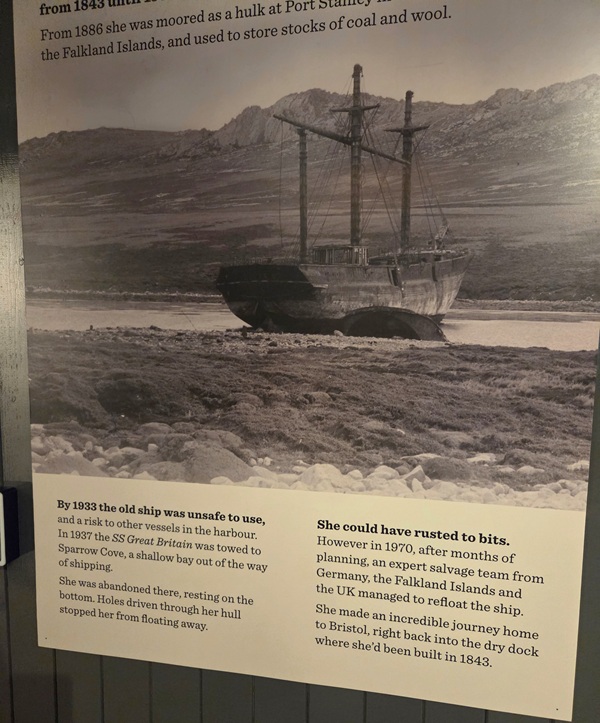
During the Crimean War (1853-6), SS Great Britain saw service as a troop carrier but survived the experience to resume its successful passenger route to Australia. Still in service in 1870, the ship’s glamorous past was but a memory, and it was used to transport coal from Wales to San Francisco. This now old ship was converted to cheaper sail by Antony Gibbs & Son in 1882 (from my last post on the Tyntesfield mansion) and made its last fateful voyage in 1886 when it was wrecked off the Falkland Islands in the South Atlantic carrying exported guano (nitrate-rich seabird droppings for fertiliser). Remaining above the waterline, SS Great Britain had a long and ignominious end as a coal bunker and wool store for the next 50 years. However, in 1936, the ship was eventually scuttled due to being an obstacle for other vessels. Ultimately, it was devised in 1970 to bring her back to her home in Bristol where a German company used a flotation ‘mattress’ to get her out of the mud & transported by barge & restored as a tourist attraction in its original home & dry dock of Bristol. Today the ship is managed by the SS Great Britain Trust.
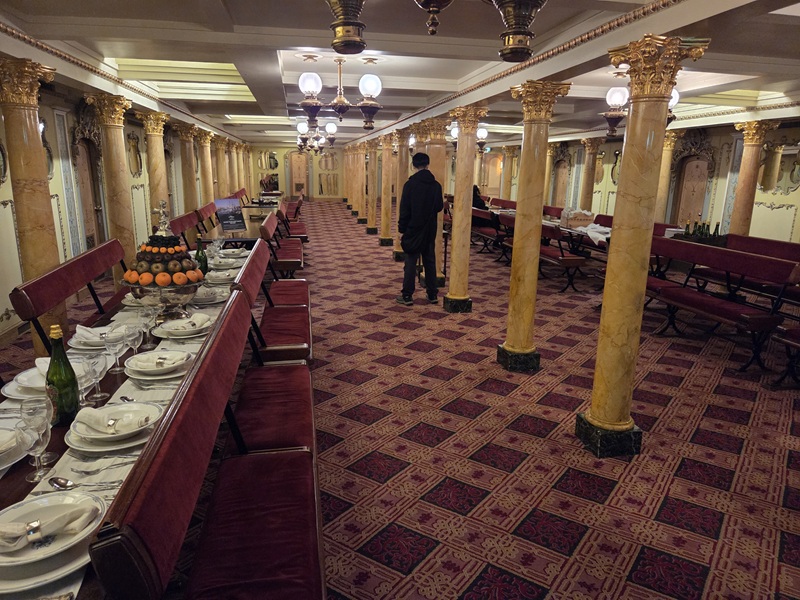
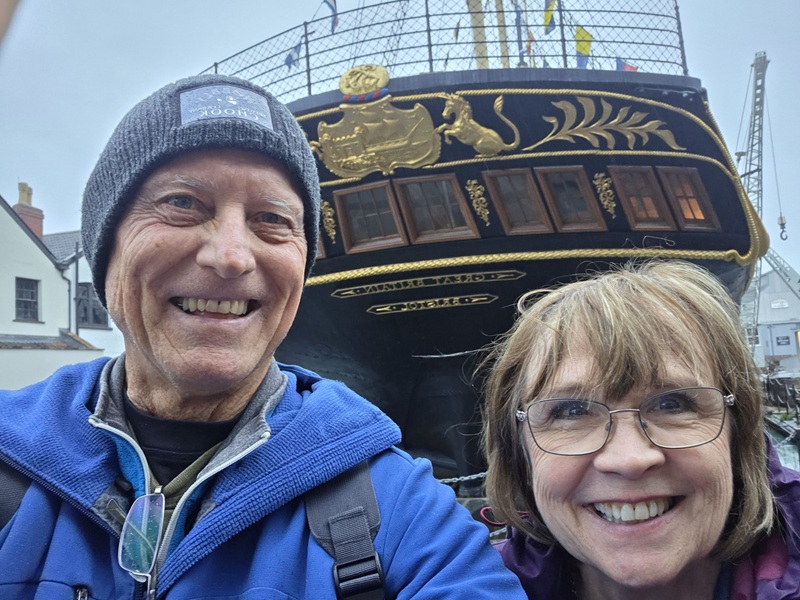
You can view this magnificent vessel on its deck, the 3 levels of tight stairwells including the steam plant. There are mannequins in full costume & action poses to give you the feel of those times. The unique propellor & steam engine is beyond amazing & you can see most of the rooms, kitchen & dining, etc without too much hassle. When you’re finished with the internal viewing you exit the ship & wander back to the pavement to a small outhouse where you can do the stairs again & venture down to the dry dock to see the entire hull, propeller, rudder & anchor where you can actually touch most of it. Sue & I spent about 90mins touring this vessel & it was well worth the visit & love the selfie photo you took Sue.
It was time to head back home, ready for dinner & Dave’s return from his soccer & for me to pack my bags for the train departure from Bristol Temple Meads Station to London tomorrow at 11am. Today, we walked 7,724 steps = 5.89kms.
London UK 05/11/25
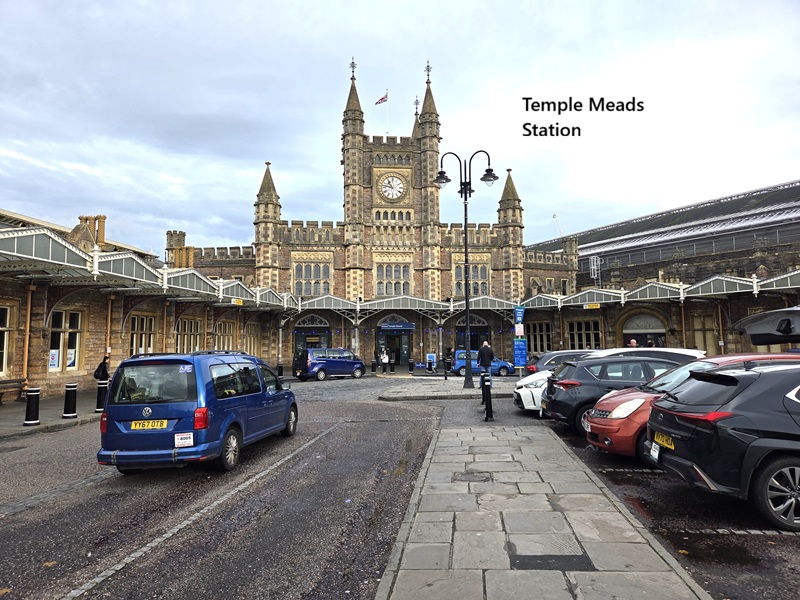
I was up early at 7am & did a quiet celebration for my daughter, Kate back home for her birthday. I was all packed & ready to fit in with Dave & Sue for their day. Dave has football commitments & Sue will drop me off at the Bristol Temple Meads Station in time for my 11am departure to London Paddington Station. Sue had the timing down to a fine art, but some traffic changes had happened, so we had to make up some time. Sue hurriedly walked me to the platform right up to the 2nd carriage (J) & by the time we said good-bye I had climbed on & the doors started to shut. Shame it was a hurried good-bye however, seeing Sue wave & smile was a blessing that all was good. I hadn’t even stored my bags then. Sue was such a delight to fit everything in for me & words of praise don’t do the true justice. So blessed to have great friends.
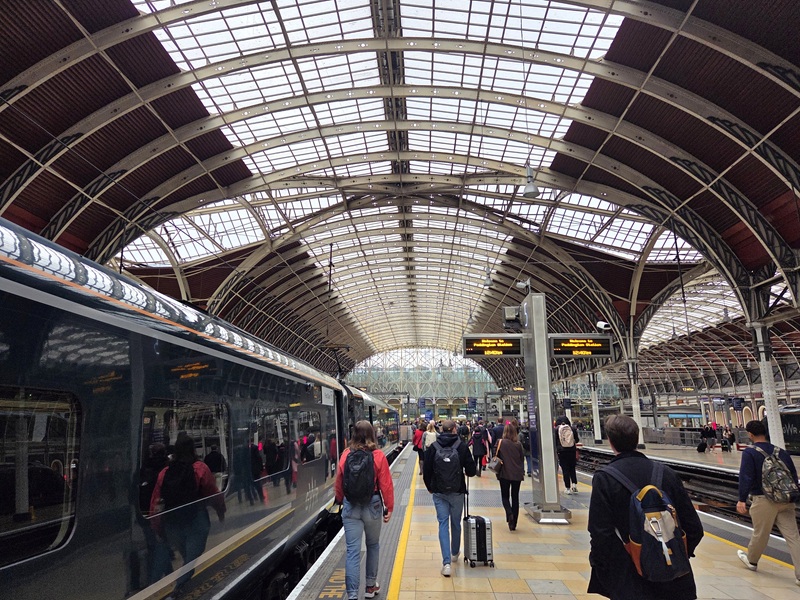
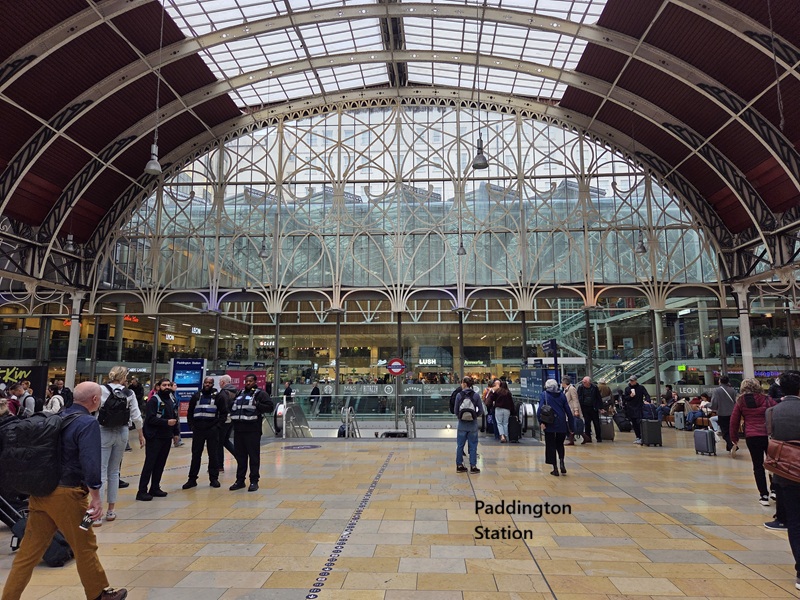
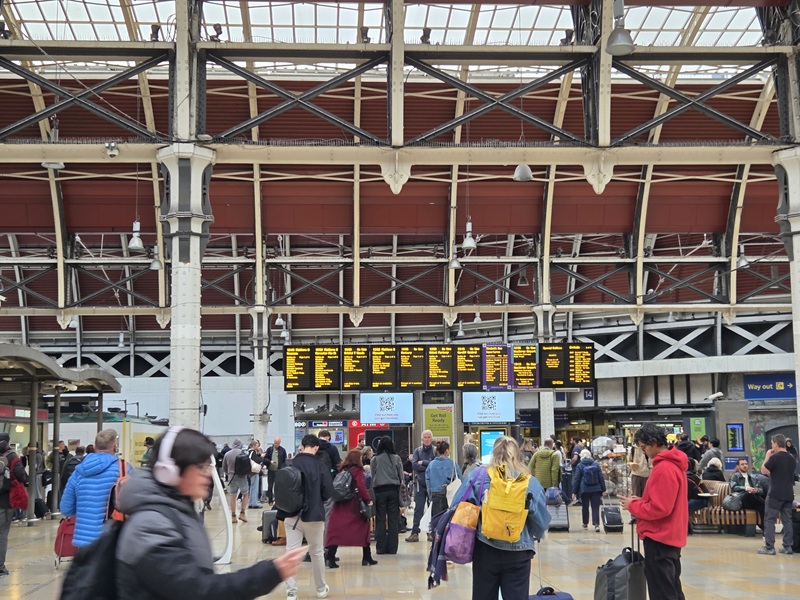
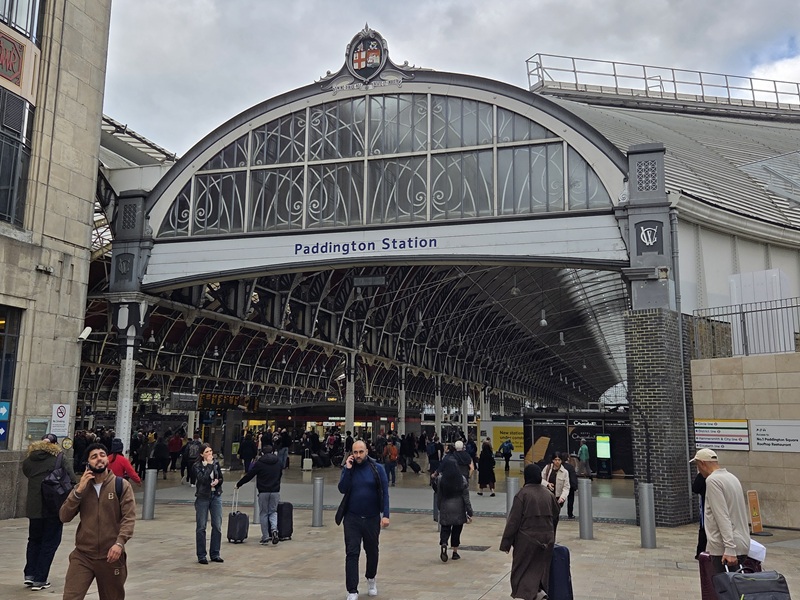
The train trip was such a breeze (1hr 40mins) to Paddington Station (a very busy station) & it was just a simple 15mins walk to my Thistle Hyde Park Kensington Hotel on Bayswater Rd aligned with Hyde Park. The walk had a mixture of shops, apartments, pubs & basically everything else of a busy suburb.
The entrance to Thistle Hyde Park Kensington Hotel was a little difficult to find as there was a redevelopment of a petrol station out the front, making the entrance on the side street. The sign said Reception 1st Floor & thankfully there were 2 passenger lifts in the lobby. I checked in OK, & after about 15mins checking in & settling into my room I was out walking around 1.30pm.
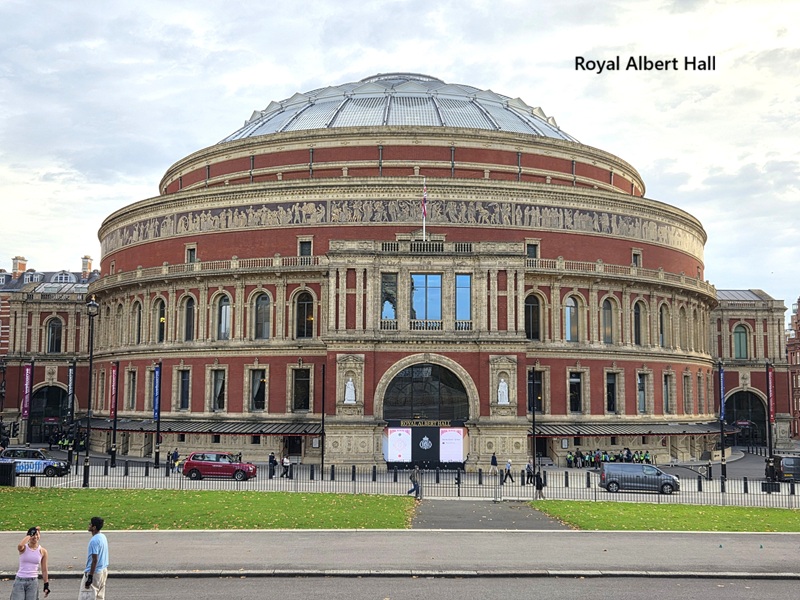
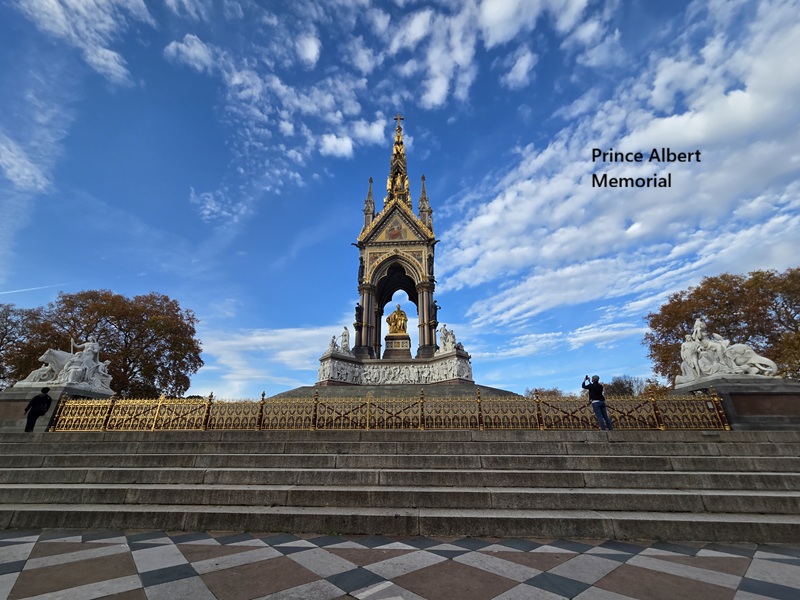
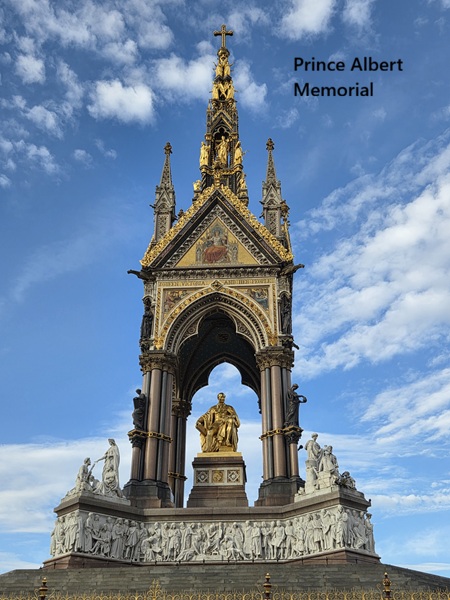
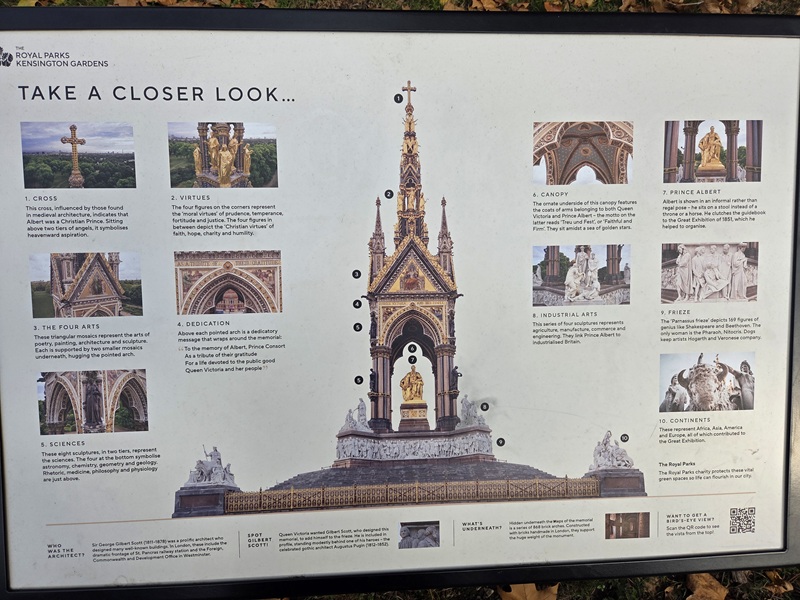
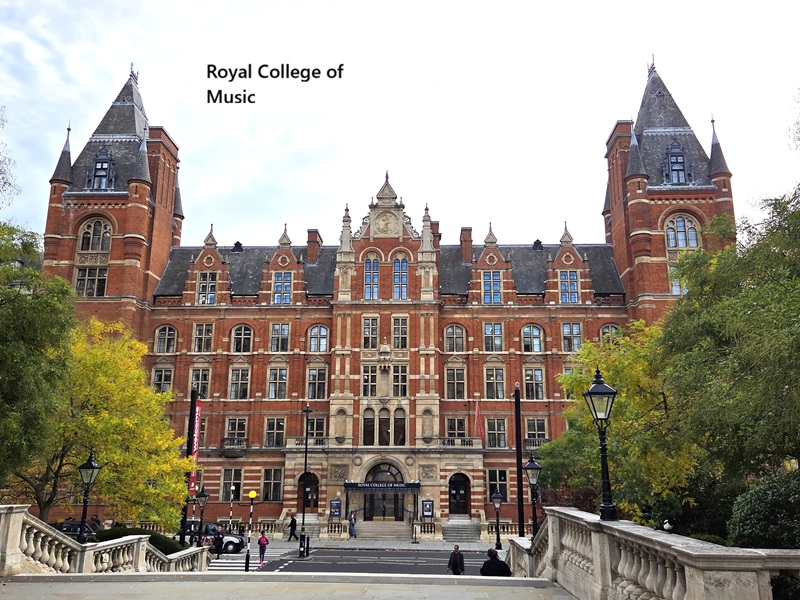
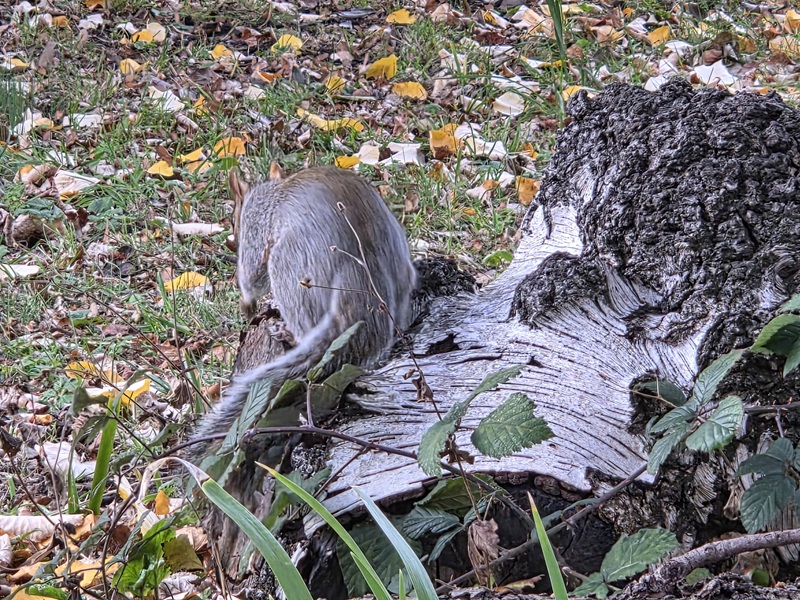
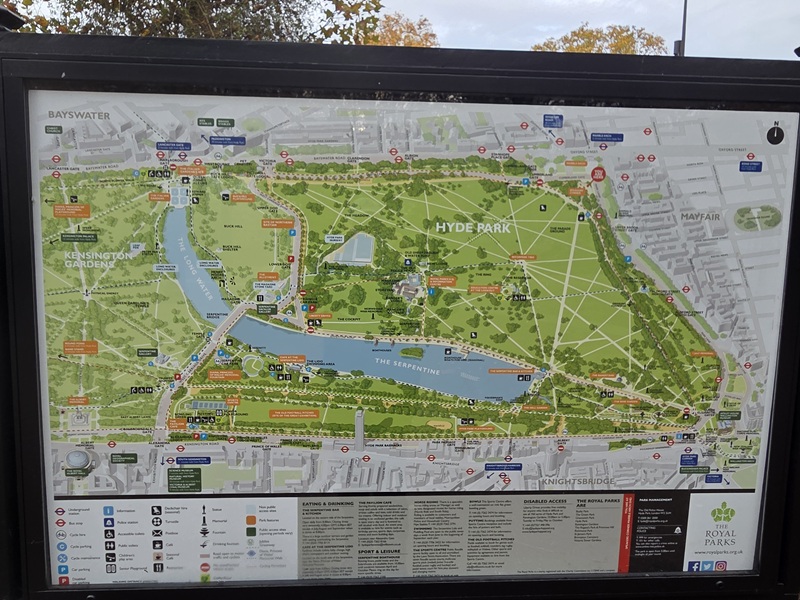
Across the road is the HUGE Hyde Park so I transversed through the Lancaster Gate entrance leading to a number of walking paths, seeing lots of people walking with their dogs, ducks in the lake & the gorgeous & playful squirrels bounding around in the thick fallen Autumn leaves of numerous trees & reached the other side to see the Gothic Prince Albert Memorial & the famous Royal Albert Hall. Unfortunately, there was a school’s event on & no admission was allowed, but I could walk around it. The next few days will be taken up by War Veterans Remembrance Day commemorations so there will be no concerts, etc, nor a chance to see inside while I’m in London.
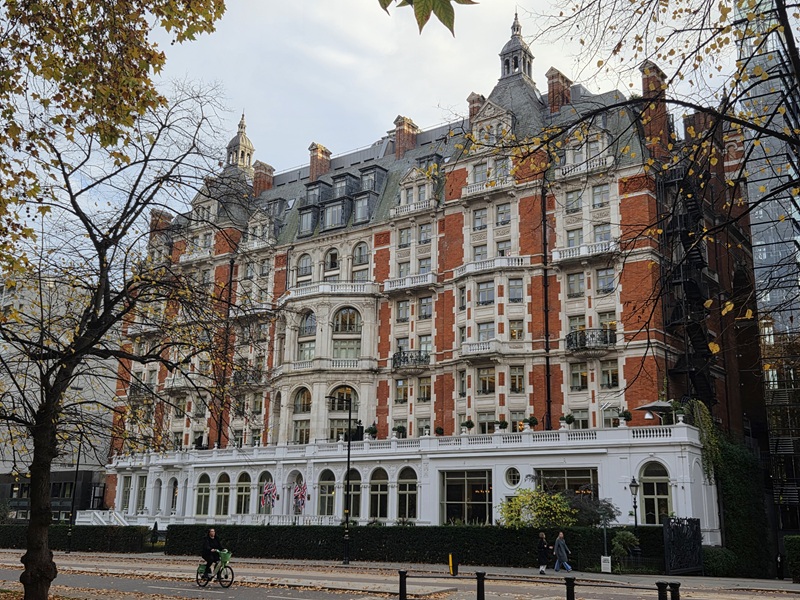
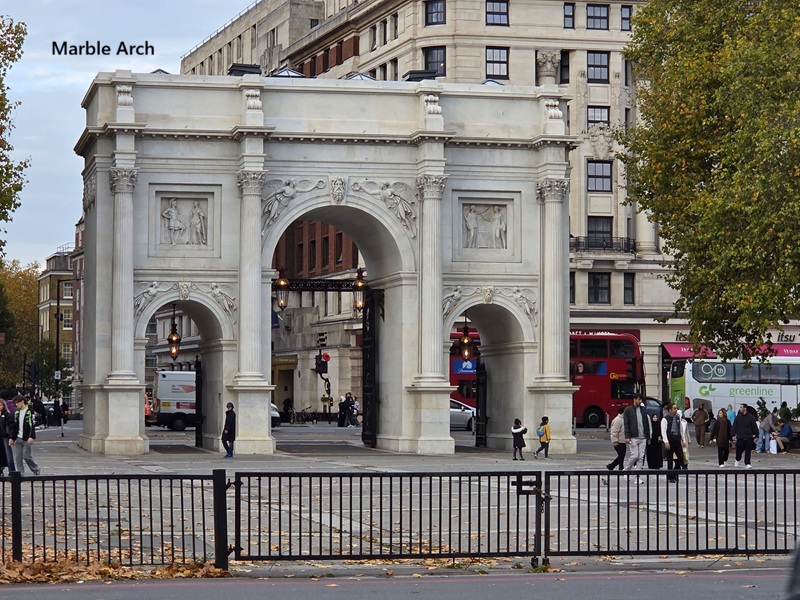
From there I just kept walking & looking at the excessively rich neighbourhood. I had a sense of a nosebleed happening with the money air around. This area also has some embassies as well & numerous British Flags flying. Eventually I had walked the half-length of Hyde Park to the Hyde Park Corner & then up to The Marble Arch (basically where Bayswater Rd ends & the start of Oxford Street). After a quick look around, I proceeded West along Bayswater Rd to my hotel to finish off the day. Quite the walk lap to do. All in all, I walked 12,149 steps = 9.53kms in that quick afternoon.
I’ll end my Blog #23 here. Many thanks for reading my blogs. My next blog will be more of London UK & I’m sure multiple blogs will follow on the number of days here. Please stay safe, happy & healthy. Cheers.
 BH Life Travels